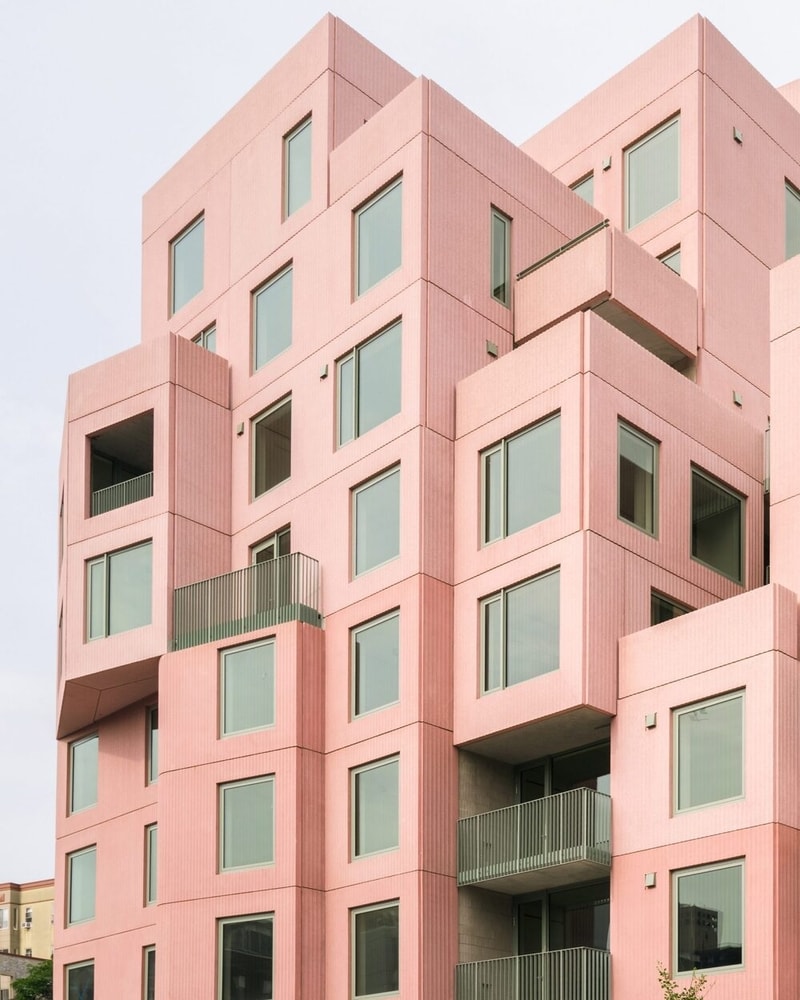
The 144 Vanderbilt by SO–IL is a residential building in Brooklyn constructed using prefabricated concrete panels in a distinct pink tone. New York architecture studio SO–IL designed the project for developer Tankhouse, assembling the facade from stacked precast elements in varying sizes. These components form a textured exterior with curved and scalloped profiles, creating depth across the surface while giving the building a strong visual identity within the neighbourhood.
The apartments are organised behind this outer layer, with openings cut into the concrete grid to bring in light and frame views. The facade acts as both structure and enclosure, with the panels arranged to balance solidity and porosity across different elevations. The building sits on a corner site, with its massing stepping slightly to respond to surrounding streets. The use of coloured concrete is applied consistently across the exterior, with no additional cladding or surface treatment.
Image Credit: Valeria Flores
Why This Trend Is Growing
- Prefabricated-colored-facades
- Prefinished colored precast panels demonstrate a shift toward facades that combine finish and construction, enabling consistent aesthetic identity without separate cladding systems.
- Integrated-structural-enclosures
- A facade that serves simultaneously as structure and enclosure points to new opportunities for reducing building layers and simplifying assembly processes.
- Modular-textured-designs
- Stacked modular elements with varied sizes and curved profiles highlight how modularity can produce high-resolution surface texture and individualized massing at scale.
Industries Being Reshaped
- Residential-developers
- Developers focused on urban infill are presented with prospects for faster delivery and distinctive branding through standardized, finish-integrated facade systems.
- Precast-concrete-manufacturers
- Producers of precast components are positioned to expand into value-added offerings that combine pigmentation, complex geometry, and integrated openings for turnkey enclosure solutions.
- Architectural-material-startups
- Material innovators can explore pigment-infused mixes and tooling techniques that enable expressive, durable surfaces without additional coatings.