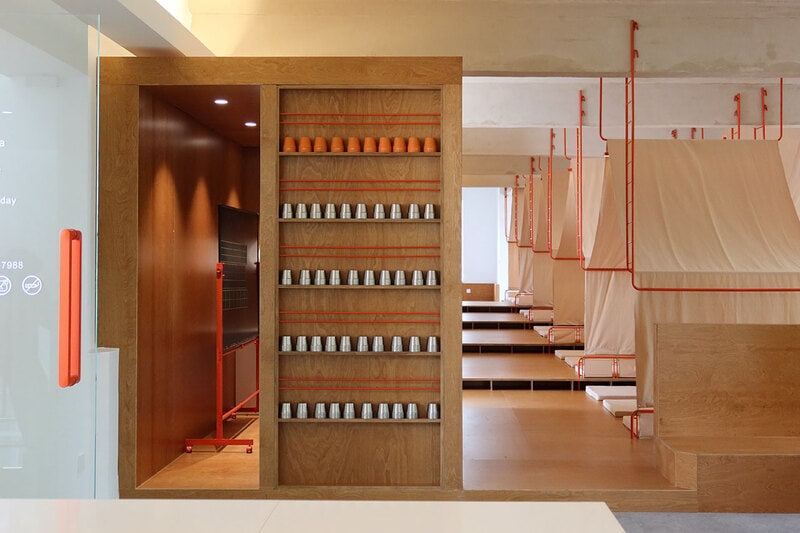
The DEYA Day Care Center in Yantai, China, designed by 11‑Design, turns a typical daycare into a whimsical camp‑style environment by integrating canvas tents and steel frames throughout indoor play and rest zones. The 2,906 ft² space, tailored for children aged six to twelve, is organized with clusters of off‑white canvas shelters supported by bold orange metal frames, creating intimate multi‑use areas for play, quiet time, or reading.
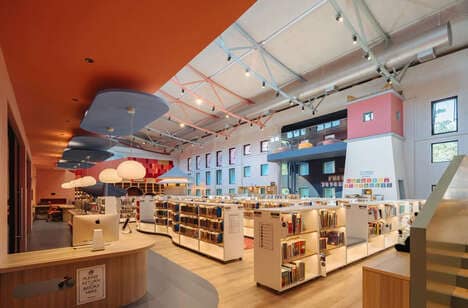
Circulation pathways wind through tiered wooden platforms, while layers of ladders, climbing structures, and built‑in bookshelves double as seating and storage. Curtains and ladders provide scale‑appropriate spaces that children can physically engage with, supporting both active play and retreats. Furnishings such as tables and desks are constructed from local birch plywood, reinforcing cost‑effective sustainability. By rethinking daycare interiors with tent‑like forms and soft enclosures, DEYA prioritizes child autonomy, atmosphere, and sensory comfort—fostering a nurturing environment crafted for imagination and exploration.
Image Credit: 11-Design
What's Driving This Trend
- Multi-functional Play Structures
- Innovative daycare designs incorporating versatile play structures offer new opportunities for creating dynamic environments that foster both playful exploration and quiet retreats.
- Sustainable Design Materials
- The use of locally sourced materials like birch plywood in childcare settings highlights a shift towards sustainable and cost-effective construction methods in early childhood environments.
- Child-centric Interior Design
- Emphasizing aesthetics tailored for children, such as canvas tents and cozy enclosures, redefines daycare spaces by prioritizing sensory comfort and structured autonomy for young users.
Who This Affects Most
- Childcare Services
- Incorporating innovative design elements in daycare facilities presents a new frontier for enhancing child development through imaginative, adaptive play environments.
- Interior Design
- Designing with an emphasis on child-friendly aesthetics transforms traditional interiors by integrating playful, sensory-rich elements that appeal to younger audiences.
- Sustainable Construction
- Leveraging sustainable materials in constructing childcare facilities aligns with broader industry trends towards environmentally conscious building practices.