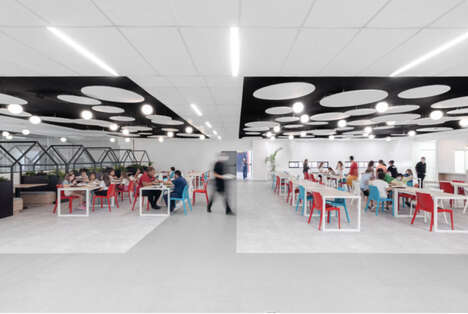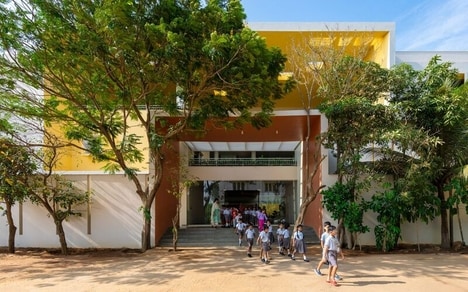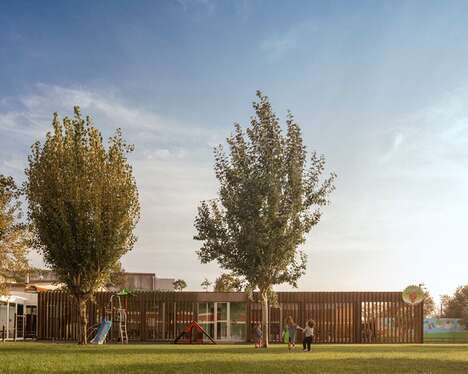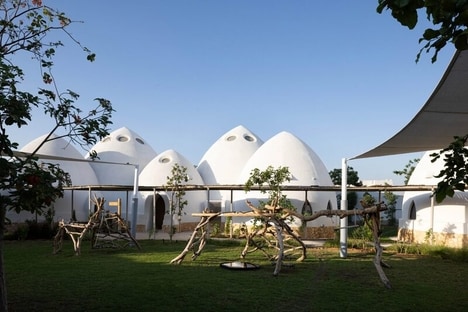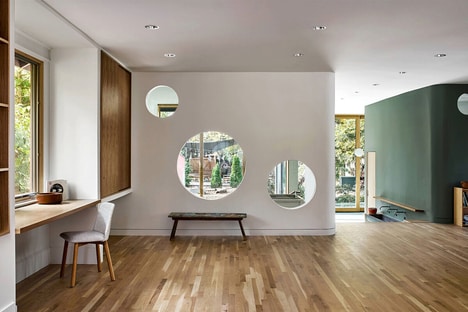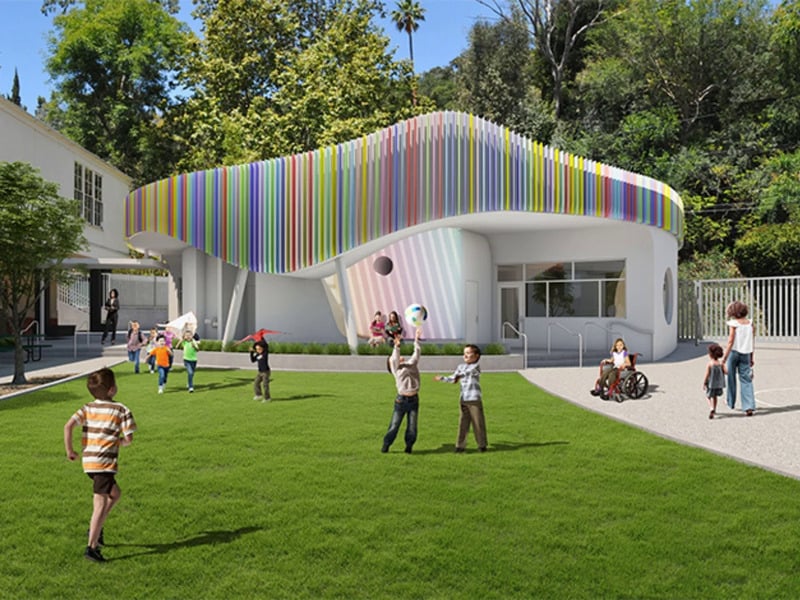
The team at John Friedman Alice Kimm Architects (JFAK) has designed the Wonderland Elementary School. It is a captivating kindergarten education building that embodies a playful and colorful ambiance. Young kids are the focus of the design, ensuring that the space fosters learning and creativity. This way, it is not dreadful coming to class but instead, creates more excitement.
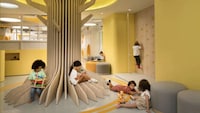
Inside, the classrooms are designed to cater to the needs of kindergarteners. All of the rooms are designed with a reading nook that falls under natural light to provide a comfortable space to reflect and read. The storage units are built low, along with the seating in an integrated and welcoming accessibility for all young children to enjoy.
Image Credit: John Friedman Alice Kimm Architects (JFAK)
What Makes This Trend Stand Out
- Eco-friendly Architectural Designs
- The growing demand for sustainable educational spaces presents opportunities for eco-friendly architectural solutions that integrate environmental responsibility with vibrant learning environments.
- Color Psychology in Education
- Exploring the impact of color on mood and learning in school design offers avenues to enhance student engagement and creativity through strategic color placement.
- Child-centric Interior Design
- Designing interiors that prioritize accessibility and comfort for young learners can revolutionize early childhood education spaces.
Sectors Adopting This
- Sustainable Architecture
- The integration of eco-friendly materials and designs in school projects highlights a shift towards environmentally responsible architectural practices.
- Educational Furniture
- Customized, low-height, and accessible furniture for young learners can foster an inclusive and engaging educational environment.
- Interior Design for Education
- Innovative interior design strategies that emphasize natural lighting and playful spaces are transforming traditional educational environments.