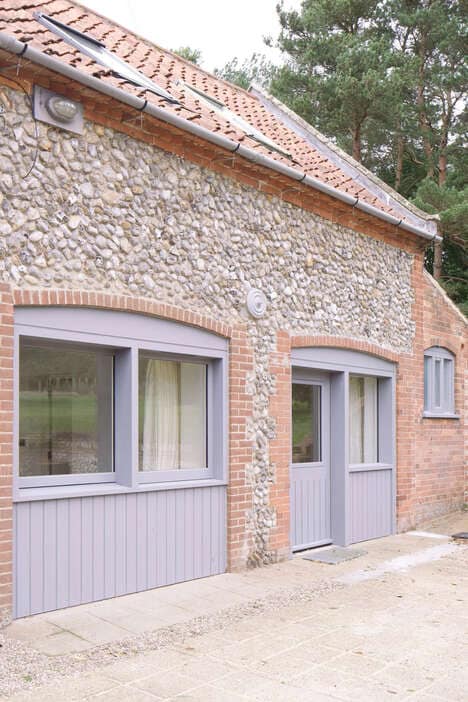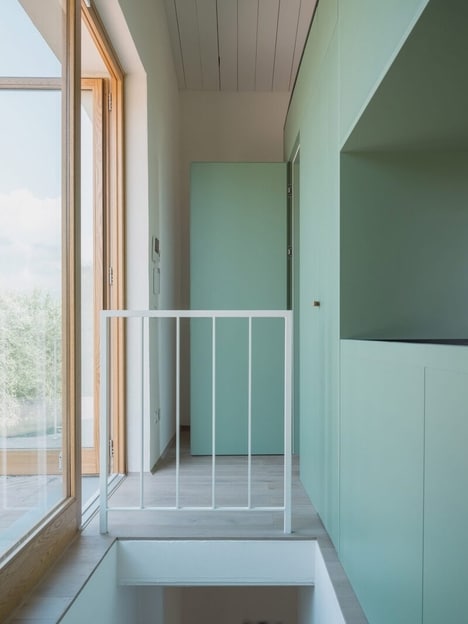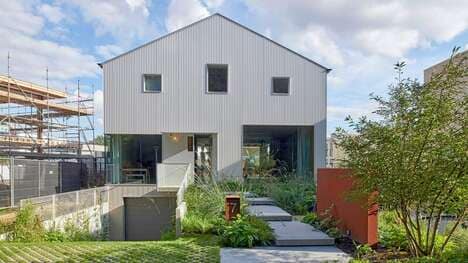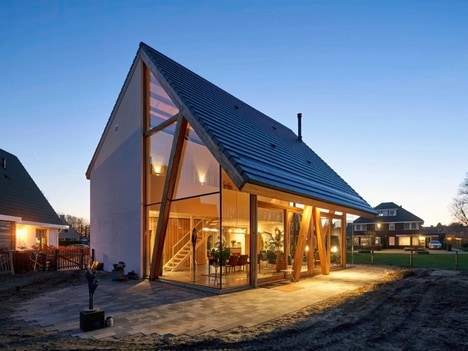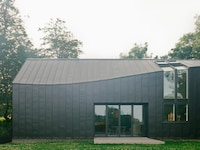

Church Hill Barn, a home designed by David Nossiter Architects, is a contemporary home that adheres to the best aspects of conservation, both in terms of cultural and environmental conservation. The home, located in the English county of Suffolk, was once a simple red brick barn, but it has been repurposed in order to house a family comfortably.
Admittedly, barns are not the most comfortable living space (unless one happens to be a farm animal.) However, the barn has a cruciform shape that was the result of its original owner experimenting with alternative forms of farming, which prompted local officials to designate the space as a heritage site. Forbidden from tearing it down, David Nossiter Architects instead transformed Church Hill Barn into a spacious but comfortable living space for the clients who bought the property.
What's Driving This Trend
- Conservation Architecture
- Opportunity to repurpose existing structures and conserve cultural and environmental heritage through innovative architectural designs.
- Adaptive Reuse
- Exploring possibilities of transforming unconventional structures like barns into comfortable and functional living spaces.
- Heritage Preservation
- Creative approaches to preserve heritage sites and buildings while adapting them to modern living requirements.
Who This Affects Most
- Architecture
- Architects and designers can explore innovative ways to repurpose existing structures and conserve cultural and environmental heritage.
- Real Estate
- Real estate developers can consider adaptive reuse projects to transform unconventional structures into desirable and unique living spaces.
- Historical Preservation
- Organizations and professionals involved in historical preservation can implement creative strategies to repurpose heritage sites while ensuring their original value is maintained.