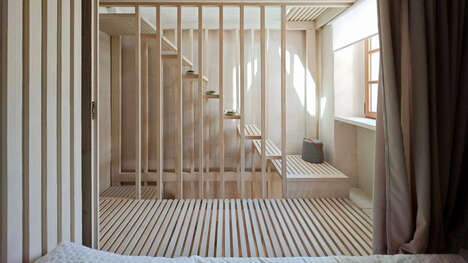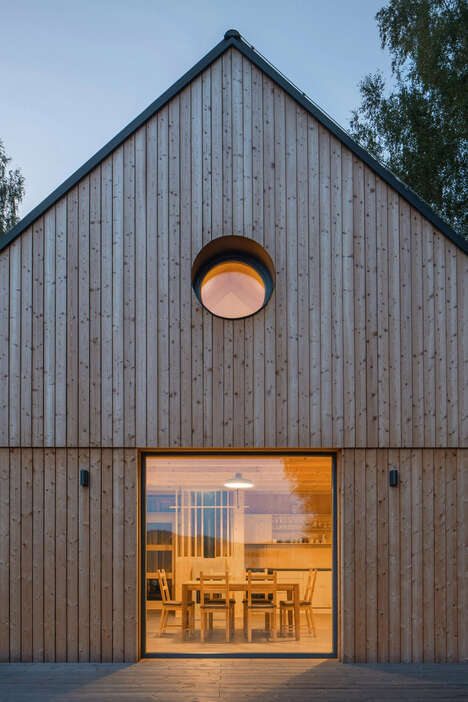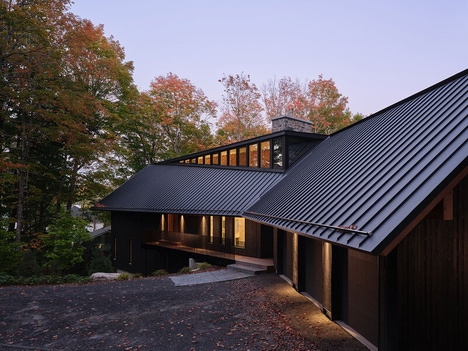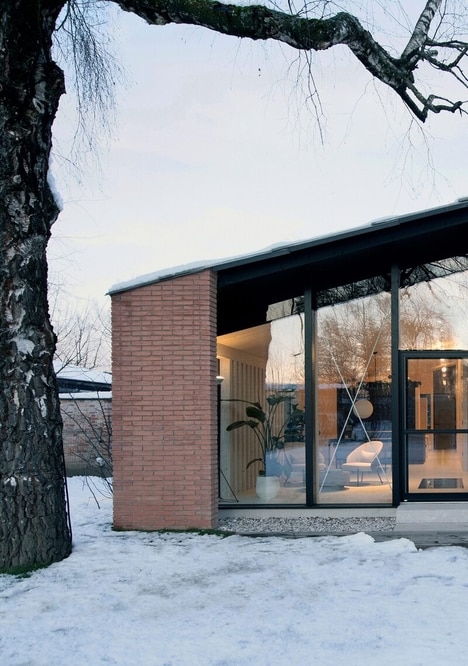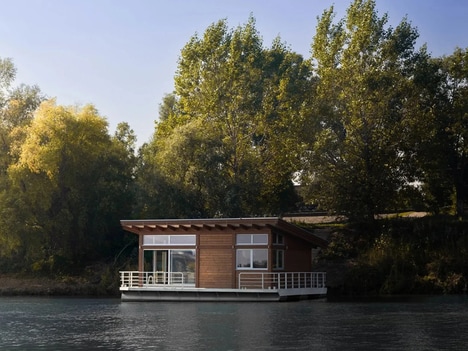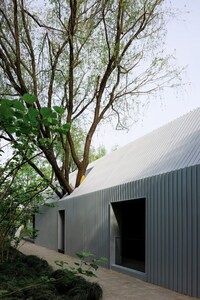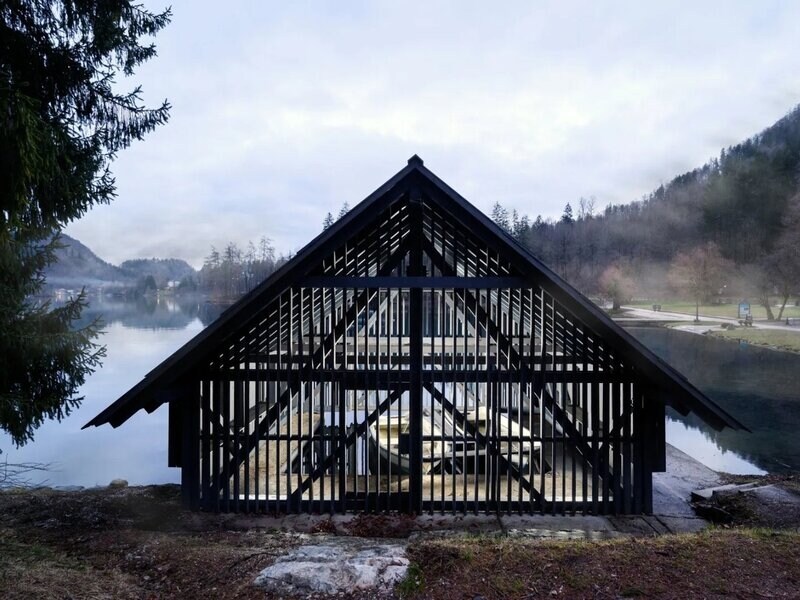
The Boathouse Zuka Lab adapts a heritage boathouse as a research HQ on Lake Bled’s western shore. OFIS Architects meticulously dismantled and restored the 25.5 m² alpine structure using traditional pine-resin treatments before reassembling its wooden planks into a rhythmic slatted facade. This clever design filters daylight and offers transparency, while the building glows softly at dusk, transforming a simple boathouse into a beacon of both tradition and innovation.
A new filtration garden installed on the steeply pitched roof tests eco-friendly water cleansing methods by pumping lake water through planted wooden trays. Inside, the space was upgraded with timber flooring, replacing cold cement tiles to create a warmer, more comfortable environment for researchers. Now serving the Slovenian Environment Agency, the structure supports water-quality monitoring efforts and acts as an educational landmark—showcasing how adaptive reuse can preserve heritage, foster environmental stewardship, and inspire sustainable architecture.
Image Credit: Miran Kambic
What's Driving This Trend
- Adaptive Reuse Architecture
- The transformation of heritage buildings like boathouses into modern research facilities exemplifies innovative design that combines tradition with contemporary utility.
- Eco-friendly Water Filtration
- The integration of filtration gardens on building rooftops introduces innovative methods for water cleansing that merge architectural design with environmental sustainability.
- Sustainable Material Use
- The shift from cold cement tiles to warmer timber flooring highlights an industry trend towards using sustainable materials for both aesthetic and functional benefits.
Who This Affects Most
- Architecture and Design
- Innovative approaches in architecture, such as repurposing heritage structures with modern functionality, open opportunities for sustainable and culturally sensitive designs.
- Environmental Science
- The effective combination of architecture with environmental monitoring creates new pathways for scientific research infrastructure that marries functionality with ecological consciousness.
- Heritage Conservation
- This field sees disruption through the intersection of preservation techniques with modern environmental and educational functions, offering a renewed purpose for traditional structures.