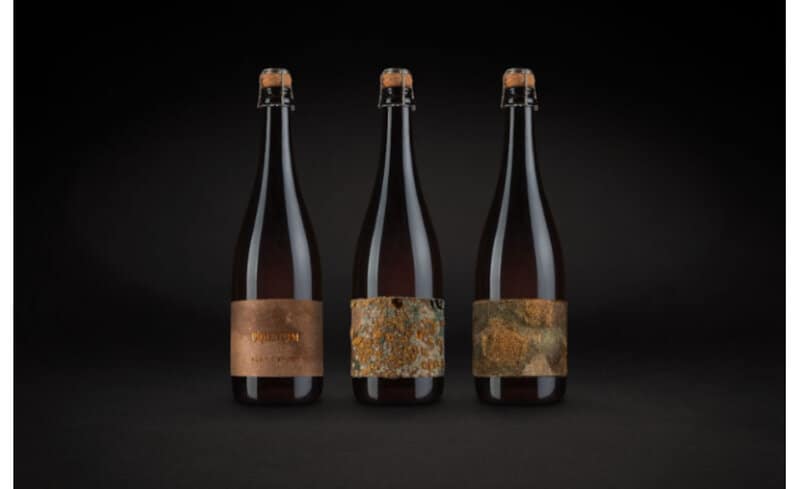
Piquentum Brut Nature turns waste from its own winemaking process into a label that keeps developing after bottling. The Croatian wine brand used sediment from second fermentation, then paired it with paper pulp from its own waste stream to create a label for the sparkling wine.
The label contains 10% paper pulp, which helps the sediment hold together as a printable material instead of being discarded. As it ages, the surface can form mold and change over time, so each bottle reads as a record of the wine's natural process.
Winning the Diamond Award at Pentawards 2026 gives the format a premium-design platform, not just a sustainability message. By turning a byproduct into the label itself, Piquentum makes packaging part of the product story and gives circular materials a more visible role in wine branding.
Image Credit: Piquentum
Why This Trend Is Growing
- Waste-derived Packaging
- By transforming production byproducts into premium packaging materials, brands can make circularity visible while reducing reliance on conventional substrates.
- Living Label Design
- Packaging that evolves after purchase introduces sensory storytelling and turns each product into a distinct artifact shaped by time and natural processes.
- Process-led Branding
- Embedding manufacturing remnants into the final design creates stronger provenance cues and reframes sustainability as part of the product’s identity.
Industries Being Reshaped
- Wine and Spirits
- Premium beverage producers can differentiate through packaging that reflects fermentation, terroir, and craft while elevating waste streams into branded assets.
- Sustainable Packaging
- Material innovators are finding new value in agricultural and production residues that can replace or enhance traditional paper, labels, and decorative finishes.
- Luxury Branding
- High-end brands can use imperfect, changing, and bio-based materials to signal exclusivity through authenticity rather than polished uniformity.