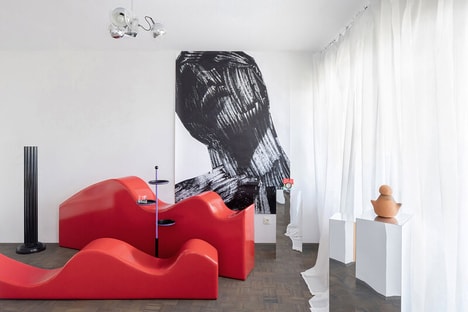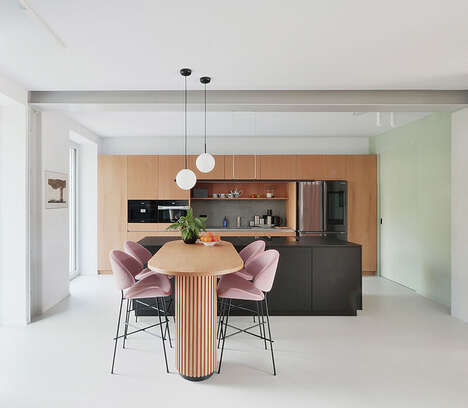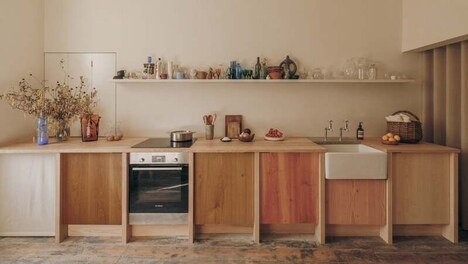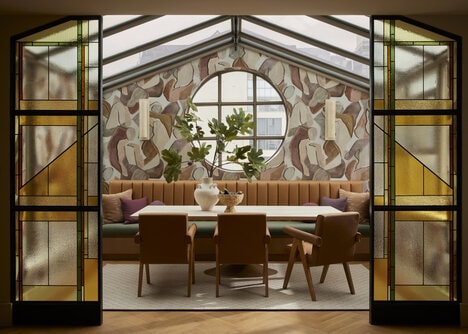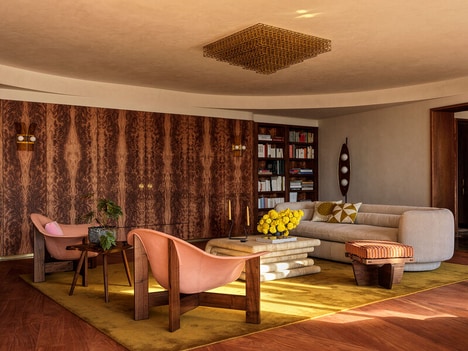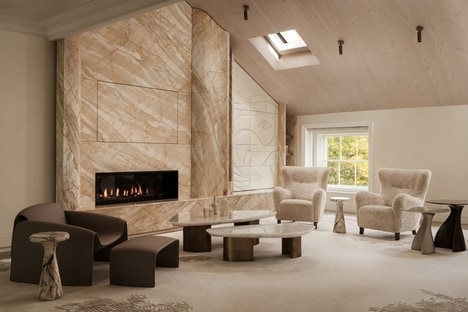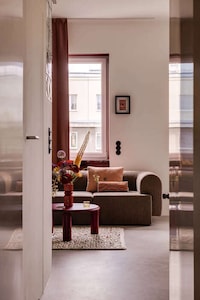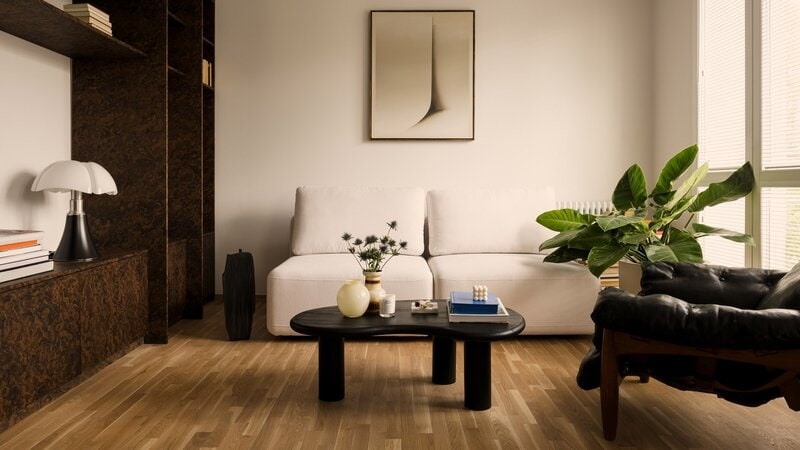
This Warsaw apartment renovation's mid-century design merges architectural history with expressive materials. Designer Dawid Konieczny reimagined the 1950s layout to create a warm, textural home layered with California Burr veneer, stained oak parquet, and custom-made furniture. “I wanted to draw on the architectural context itself, so that the references to mid-century modern and modernism would be historically grounded in the building’s fabric,” Konieczny explained. A bespoke floor-to-ceiling shelving unit anchors the living space and pays homage to Ettore Sottsass’s Alpi veneer.
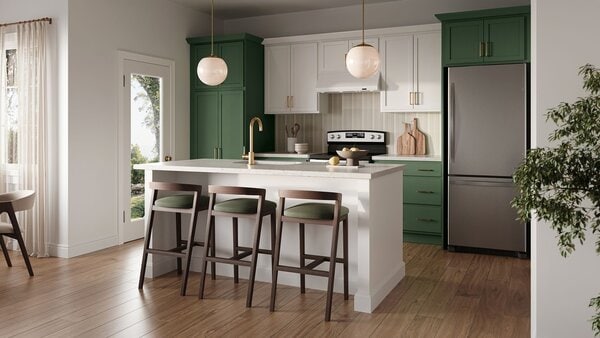
The compact 55-square-metre layout was reshaped to include an open-plan living area, a soft-toned bedroom, and a marble-tiled galley kitchen. A red-tiled bathroom with gridded surfaces completes the palette, bringing what Konieczny called “a cohesive and balanced narrative” to the project. Throughout, Pierre Chapo-inspired dining chairs and a Sergio Rodrigues armchair add sculptural mid-century touches, while gauzy curtains and sandy hues soften the modernist edge.
Image Credit: Oni Studio
Key Themes Behind This Trend
- Sustainable Interior Materials
- The use of expressive materials like California Burr veneer and stained oak parquet in renovations exemplifies a shift toward sustainable and textural design choices.
- Mid-century Modern Revival
- Reimagining 1950s designs with modern sensibilities showcases a resurgence of mid-century modern aesthetics in current home renovations.
- Custom Furniture Innovation
- The integration of custom-made furniture highlights an increasing demand for personalized and unique interior design elements.
Where This Applies
- Home Renovation
- The evolving trends in mid-century design present significant opportunities for the home renovation industry to focus on blending historical and modern elements.
- Furniture Design
- The demand for bespoke furniture pieces is driving growth in the furniture design sector, emphasizing craftsmanship and originality.
- Interior Design Services
- Interior design services are innovating by incorporating historical elements with contemporary materials, appealing to a market that values both aesthetics and context.