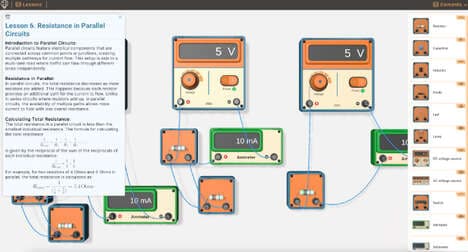
The Northern Centre for Advanced Technology (NORCAT) Cybermine training simulator virtually equips heavy equipment operators for the work that they will soon be doing underground.
Without putting new recruits at rick, the Cybermine Equipment Simulator makes it possible for people to practice running through the correct procedures during hazardous, high-stress scenarios. This system is also proving to be a useful indicator of assessing risks and potential safety hazards, making it easier to take more preventative action.
In partnership with the Laurentian University Goodman School of Mines and the Centre for Research in Occupational Safety and Health (CROSH), formal studies of new and existing machine operators are being conducted to monitor human biometrics in response to the training simulator. This makes it easier to answer: "How are the trainees responding physically to a hazardous situation?"
Key Themes Behind This Trend
- Mining Simulators
- Virtual simulators provide a risk-free environment for operators to gain experience and assess potential safety hazards.
- Biometric Monitoring
- Formal studies of human biometrics allow for a better understanding of the physical response to hazardous situations in training simulators.
- Predictive Risk Assessment
- Data collected from training simulators can be used to identify potential safety hazards and take preventive action before accidents occur.
Where This Applies
- Mining
- Virtual training simulators offer mining companies a way to train operators and reduce accidents while in the field.
- Occupational Safety and Health
- Biometric monitoring can be applied in other hazardous industries to identify potential safety risks and improve employee training programs.
- Education
- Institutions offering heavy equipment operator training programs can use simulators to provide a more comprehensive and effective training experience for students.