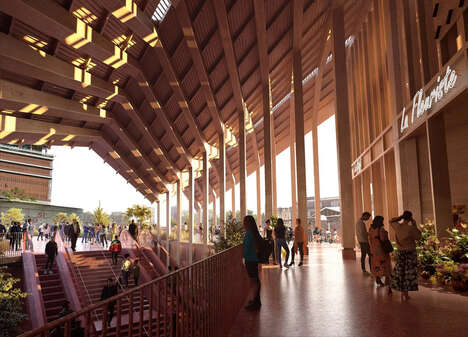
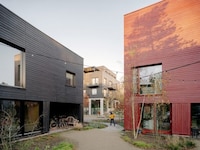
These timber towers are proposed by Anders Berensson Architects and the project is a direct move for sustainability in Sweden's housing market.
As a construction material, wood is known to meet industry standards and release the least carbon dioxide. Hence, the "wooden skyscraper city" is conceived with reference to the highest degree of eco-consciousness. In addition, Anders Berensson Architects envisions gardens that cover the roofs of the lower-set timber towers. These vegetative systems will be connected through bridges, ultimately creating a social space for the public, where individuals can interact and be active. Moreover, the Stockholm-based architectural studio is contributing to the housing market with its timber towers by adding "5,000 new homes to the central docklands area of Masthammen."
Key Themes Behind This Trend
- Timber Skyscrapers
- The trend of building tall structures with timber offers a disruptive innovation opportunity to create sustainable and eco-friendly urban developments.
- Eco-conscious Construction
- The trend towards using wood as a construction material opens up opportunities for disruptive innovation in creating environmentally-friendly housing solutions.
- Green Roofs and Gardens
- The growing trend of incorporating gardens and green spaces on the rooftops of buildings provides an opportunity for disruptive innovation in creating sustainable and socially interactive urban environments.
Where This Applies
- Architecture and Construction
- The architecture and construction industry can leverage the trend of timber skyscrapers to develop sustainable and eco-friendly urban projects.
- Housing and Real Estate
- The housing and real estate industry can explore the trend of eco-conscious construction to meet the rising demand for sustainable and environmentally-friendly homes.
- Urban Planning and Design
- The field of urban planning and design can incorporate the trend of green roofs and gardens to create socially interactive and environmentally sustainable urban spaces.