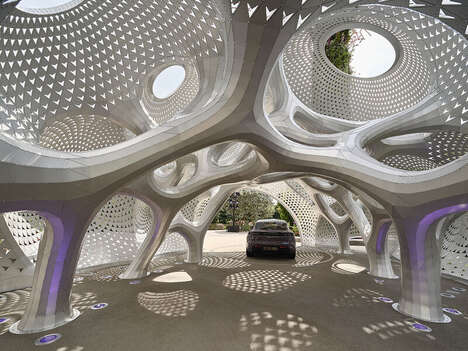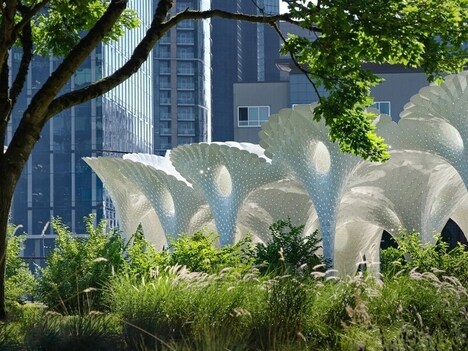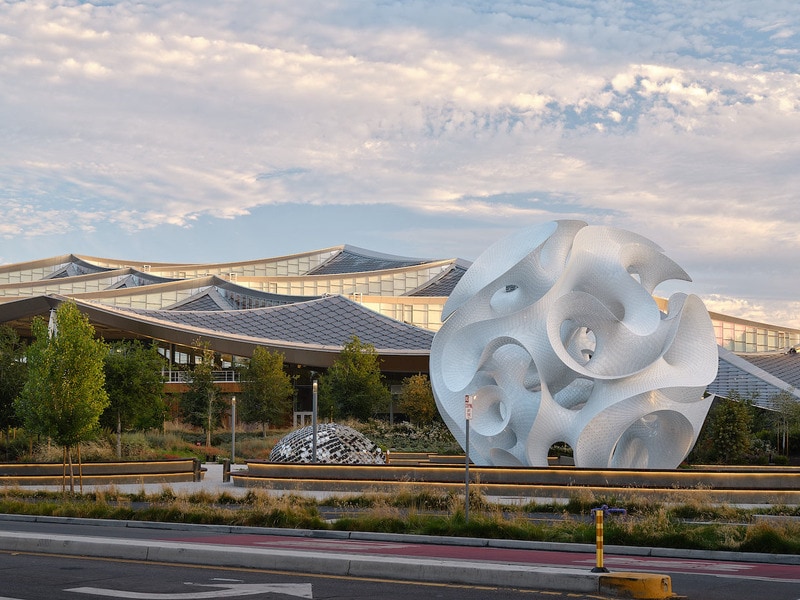
Google shines a spotlight on its latest architectural structure in the form of the Orb. It is designed by Marc Fornes, who is the founder of THEVERYMANY art and architecture firm. The pavilion boasts a swirling design language that is created from code. It grabs attention with its shimmering exterior, resembling the look of a spaceship.
The Orb looks like it is generated from a literal algorithm because it is. It is nestled in front of paths lined by trees and looks like something from another world. It is about 10 meters in height and 26 meters wide. It is entirely a self-supporting structure which was made possible through the advanced computer code with Forne's expertise.
Image Credit: THEVERYMANY
Why This Trend Is Growing
- Code-driven Architecture
- The utilization of advanced algorithms to generate complex architectural designs presents new opportunities for dynamic and efficient construction methods.
- Algorithmic Structural Design
- The adoption of algorithmic processes in creating self-supporting structures exemplifies innovation in sustainable and material-efficient architecture.
- Architectural Digital Fabrication
- The intersection of digital fabrication and architectural design allows for the creation of intricate, otherworldly pavilions that merge aesthetics with structural integrity.
Industries Being Reshaped
- Architectural Design
- The infusion of code and digital techniques into architecture is revolutionizing how structures are conceptualized and built, focusing on creativity and precision.
- Construction Technology
- Innovations in construction technology are driven by the use of algorithmically generated designs that emphasize sustainable and efficient building practices.
- Digital Fabrication
- Digital fabrication stands as a transformative industry leveraging code-based design processes to produce advanced structural forms.