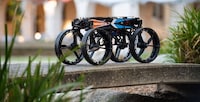
The term 'deformed' is typically not a compliment when it comes to any kind of engineering design, but a group of engineers and scientists over at Caltech and ETH Zurich in Switzerland have made deformation work to their advantage by creating a swimming robot that makes use of the advantages of deforming materials.
Specifically, this particular swimming robot is crafted out of a temperature-sensitive material that straightens up when warm but adopts a curled shape in cooler temperatures. When the polymer moves from curled to straightened position, it activates the robot's oars in order to move it forward.
This swimming robot responds to temperature but could also be manipulated to respond to other factors such as salinity levels. With its ability to be propelled without fuel, this swimming robot could be of great use in cleaning up ocean oil spills.
What Makes This Trend Stand Out
- Temperature-sensitive Materials
- Disruptive innovation opportunities exist in creating products and systems that utilize temperature-sensitive materials to achieve novel functionalities.
- Shape-shifting Robots
- Opportunities for disruptive innovation lie in developing robots that can change their shape to adapt to different environments and perform specific tasks more effectively.
- Sustainable Robotics
- There is potential for disruptive innovation in creating robots that operate without fuel or traditional power sources, contributing to sustainable solutions in various industries.
Sectors Adopting This
- Robotics
- The robotics industry can explore the use of temperature-responsive materials and shape-shifting capabilities to develop more versatile and efficient robots for different applications.
- Oil Spill Cleanup
- The oil cleaning industry can embrace swimming robots made of temperature-sensitive materials as an innovative and sustainable solution for cleaning up ocean oil spills.
- Environmental Monitoring
- The environmental monitoring industry can leverage shape-shifting robots with temperature-responsive materials to collect data in different environments and improve data accuracy.