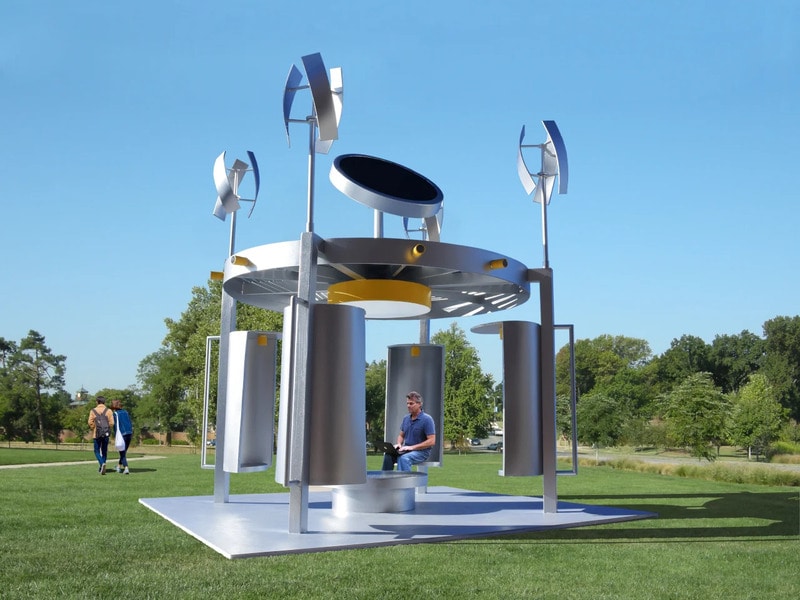
The Solar Wind Gazebos are freestanding outdoor structures that integrate solar panels and four vertical-axis wind turbines into a single shelter designed to generate renewable electricity. The roof canopy incorporates photovoltaic panels mounted on angled supports, while four compact wind turbines are positioned at the corners to capture airflow from multiple directions. Power generated by both systems is routed through inverters to integrated battery storage housed within the structure.
Electrical outlets and USB charging ports are located beneath the canopy, allowing users to charge devices such as phones, laptops, and small electronics while seated under the shelter. Structural columns conceal internal wiring and conduits that distribute power from the generation systems to the charging points. The gazebos include built-in seating and table surfaces and are constructed from a steel frame with weather-rated components for outdoor installation. The system is designed to operate independently from the electrical grid.
Image Credit: Michael Jantzen
Key Themes Behind This Trend
- Hybrid Microgeneration Structures
- Combining photovoltaic canopies with compact wind turbines in single freestanding units reveals new models for localized, multi-source electricity generation that could decentralize urban power supply.
- Off-grid Public Charging Hubs
- Freestanding shelters with integrated inverters and outlets present opportunities to redefine public infrastructure as autonomous device-charging and microgrid access points.
- Integrated Energy-storage Furnishings
- Embedding battery storage and power distribution into outdoor furniture suggests a shift toward functional objects that serve as persistent, distributed energy assets.
Where This Applies
- Urban Parks and Plazas
- Deploying renewable-energy shelters in public spaces could transform amenity planning by turning parks into resilient, revenue-generating energy sites.
- Hospitality and Outdoor Dining
- Outdoor venues equipped with self-contained power-generating gazebos imply new service models where venues offer off-grid charging and energy-backed comfort as a differentiator.
- Disaster Relief and Emergency Response
- Rapidly deployable solar-wind shelters with on-board storage indicate potential to provide immediate, decentralized power and communications support in crisis zones.