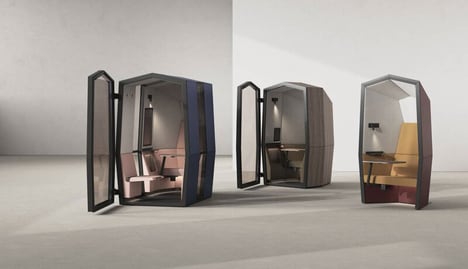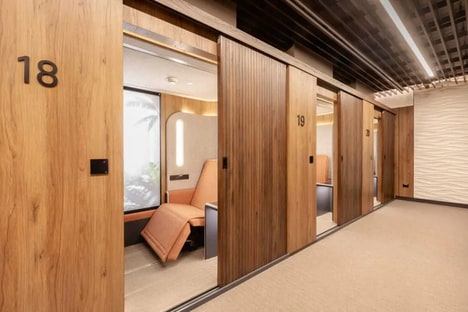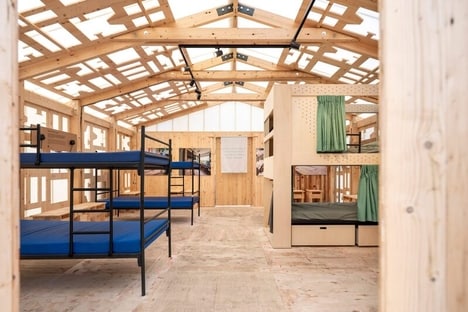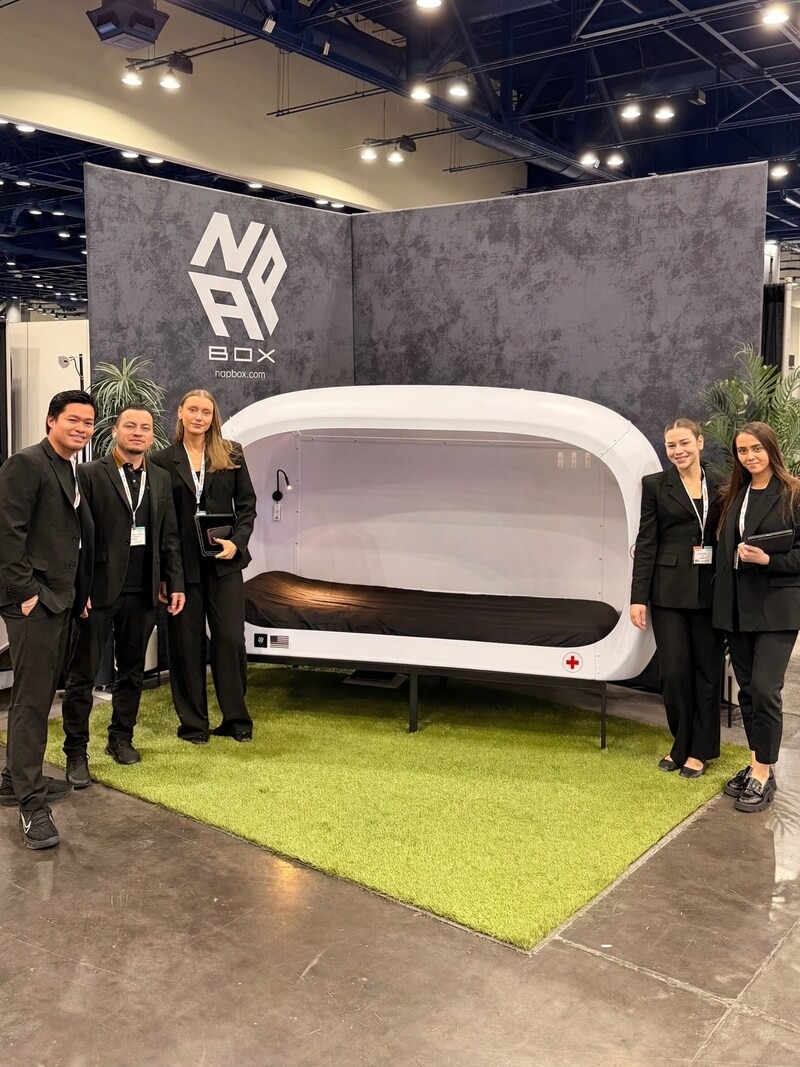
NapBox has launched an ultra-lightweight, easy-to-assemble enclosed sleep pod designed by three students for use in emergency shelters and humanitarian response settings. This design was born out of the NapBox Design Contest that turned the concept — presented by students Julia Norat, Jessica Wiens, and Mariia Plugar — into a real product now deployed in organizations like The Bowery Mission and YMCA.
The enclosed sleep pod design is sure to appeal to aid organizations as it addresses a fundamental gap in disaster relief — the lack of privacy and dignity for people sleeping in crowded gymnasiums or on cots after losing their homes, as well as for emergency responders working exhausting shifts. The pod assembles in minutes with a single tool, is light enough to lift with one hand, and creates a personal, enclosed space even in chaotic environments.
Image Credit: NapBox
Why This Trend Is Growing
- Portable Privacy Architecture
- The emergence of compact, enclosed units redefines personal space in shared emergency settings and enables new product lines focused on dignity and modular privacy.
- Rapid-deploy Modular Shelters
- Ultra-fast assembly systems that require minimal tools point toward shelter ecosystems optimized for speed, scalability, and low-skill deployment in crisis zones.
- Lightweight Human-centered Design
- Prioritizing one-handed portability and intuitive assembly signals a shift toward ergonomics-driven relief products that reduce physical burden on responders and displaced people.
Industries Being Reshaped
- Disaster Relief and Humanitarian Aid
- Aid organizations could integrate compact sleep pods to transform shelter layouts, improving privacy metrics and overall beneficiary well‑being in mass-care operations.
- Emergency Healthcare and First Responders
- Shift-rest solutions tailored for exhausted medical and rescue staff could alter on-site fatigue management and staffing resilience models during prolonged crises.
- Temporary Housing and Shelter Manufacturing
- Manufacturers focused on portable shelters may expand into lightweight, tool-minimal product lines that blend rapid deployment with consumer-grade comfort and durability.