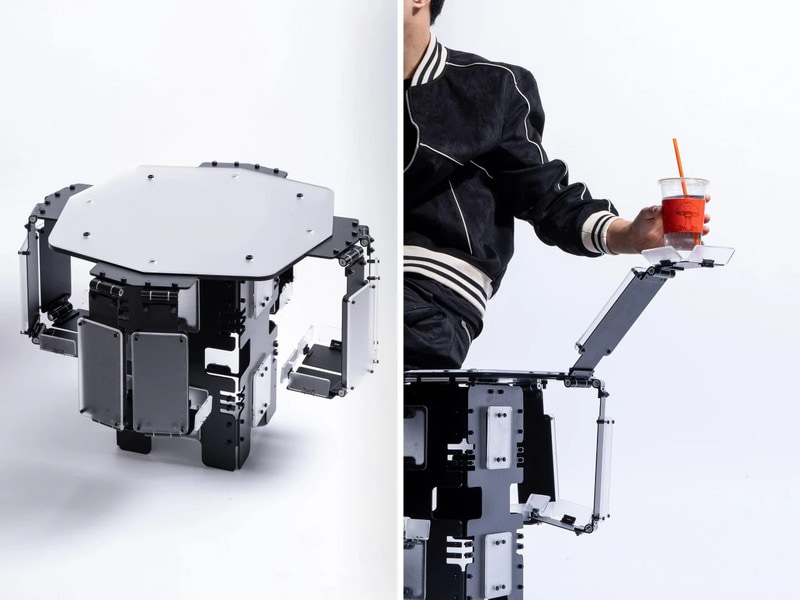
The Octo Stool is a shapeshifting seating object with eight articulated tentacles that unfold from its circular base to function as auxiliary side tables. Each tentacle is hinged near the stool’s perimeter and can be rotated outward and locked in place, creating flat surfaces at varied heights around the central seat. When all tentacles are tucked in, the stool’s footprint remains compact and circular, and can be used as a standalone seating element.
The stool is constructed from moulded plywood and metal hardware designed to support both the central seat and the extended tentacle surfaces. Tentacles can hold items such as drinks, books, or small accessories, and their positioning can be adjusted to suit user needs.
The seat’s top is finished with upholstery options including fabric and leather, while the structural surfaces use natural wood veneers. The tentacle mechanism incorporates locking pins that secure each segment when extended or stowed, and the design aims to balance load capacity with ease of transformation. The Octo Stool is offered in several wood stain and upholstery combinations.
Image Credit: Seongmin Kim
Key Themes Behind This Trend
- Modular Transforming Furniture
- Products that morph between seating and surface roles offer compact footprints while delivering customizable spatial utility through hinged, lockable elements.
- Adaptive Workspace Surfaces
- A shift toward localized, reconfigurable tabletops supports varied tasks and personal organization within open-plan and hybrid work environments.
- Human-centered Kinetic Design
- Mechanical articulation and ergonomic finishing combine to create tactile, user-adjustable pieces that prioritize comfort, accessibility, and intuitive interaction.
Where This Applies
- Hospitality and Restaurants
- Dining and lounge spaces gain value from multifunctional seating that increases table availability and optimizes limited floor areas without permanent fixtures.
- Commercial Office Furnishing
- Flexible meeting and touchdown zones are supported by transformable furniture that enables dynamic surface provisioning for collaborative work and device placement.
- Residential Smart Furniture
- Urban homes benefit from compact, multifunctional pieces that integrate storage and surfaces to maximize usability in small living spaces.