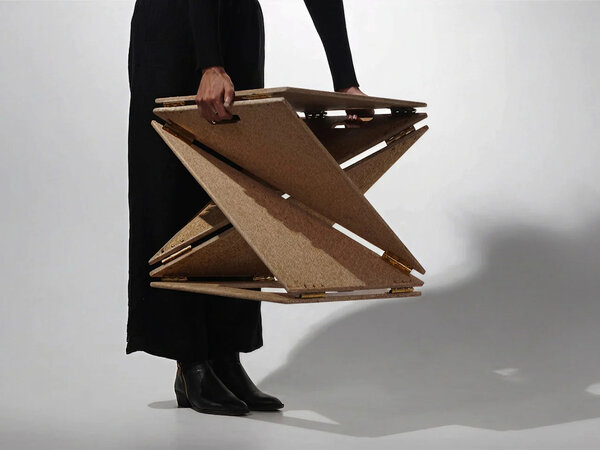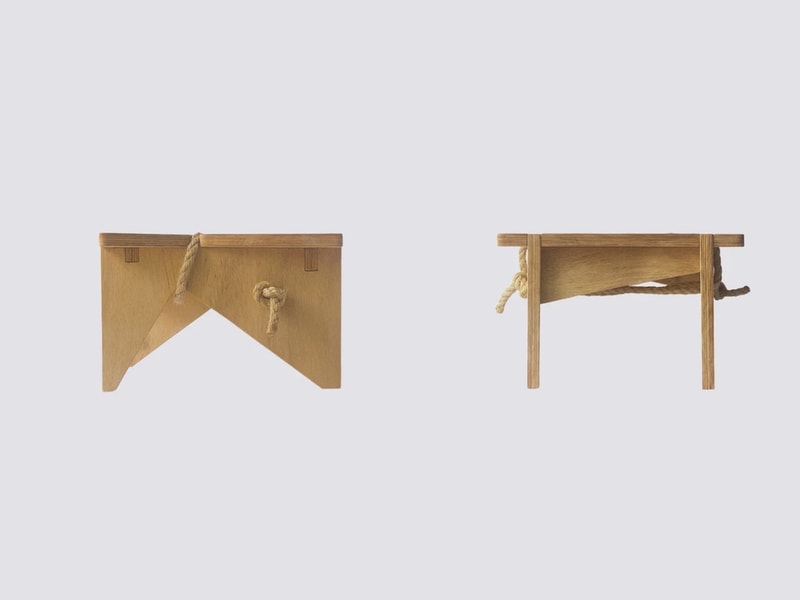
Shortcut Stool by Fabrício Reguelin Auler is a seating design based on everyday behavior rather than fixed use. The Shortcut Stool is constructed from marine pine plywood panels that slot together through interlocking joints, eliminating the need for screws or hardware. Sisal rope is tensioned across the structure, reinforcing stability while acting as a visible structural element. The system holds the frame together through compression and tension, allowing the stool to maintain rigidity without concealed connections.
The form supports multiple uses, from seating to temporary surfaces, without prescribing a single position or orientation. Units can be connected to create longer bench configurations, extending the structure without altering its base components. The stool is designed for flat-pack assembly, allowing it to be disassembled and reconfigured as needed. Available in natural pine and painted finishes such as cobalt blue and sage green.
Image Credit: Fabrício Reguelin Auler
Key Themes Behind This Trend
- Interlocking Modular Joinery
- A shift toward slot-together plywood components points to systems that enable tool-free assembly and recombination for adaptable product families.
- Visible Tension Aesthetics
- Exposed rope or cable as both structural and decorative elements reveals new avenues for honest, industrial-inspired design languages.
- Flat-pack Multi-orientation Furniture
- Furniture designed to function in multiple orientations and connect into larger configurations suggests scalable, space-efficient solutions for varied living and working environments.
Where This Applies
- Furniture Manufacturing
- Manufacturers can explore mass-producible interlocking parts and tensile reinforcement to reduce hardware costs and simplify logistics for customizable product lines.
- Outdoor and Urban Seating
- Public space furnishing could adopt durable tensioned assemblies that are modular, repairable, and reconfigurable to meet fluctuating municipal needs.
- Direct-to-consumer Home Goods
- DTC brands may leverage flat-pack, multi-use designs that lower shipping costs while appealing to consumers seeking flexible, DIY-friendly furnishings.