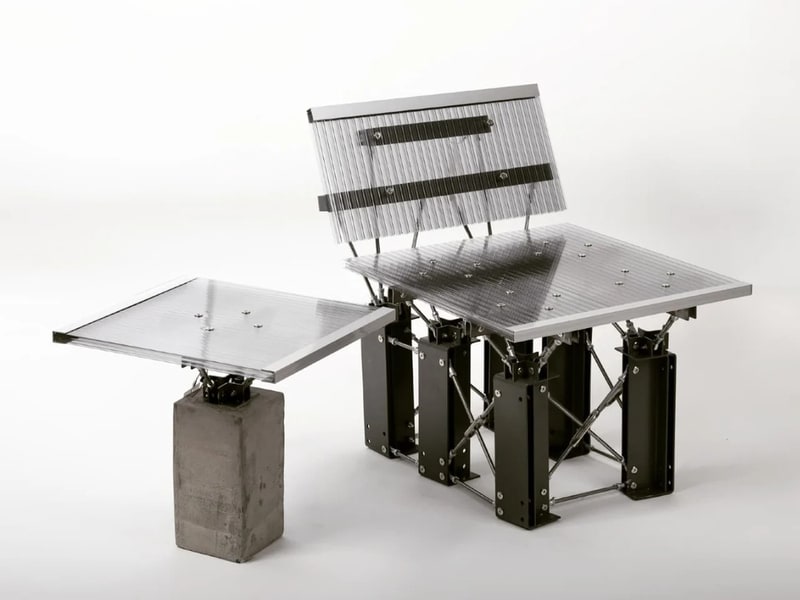
SeongJin Hwang’s studio TPGF introduced the YY Series, a two-piece furniture collection built around a repeating “Y structure,” featuring truss-like steel frameworks designed to carry load at domestic scale. The debut includes the Y1 side table and Y6 lounge chair, with the former anchored by a concrete block and the latter formed from six repeating Y modules. The series launched in March 2026 and was noted after prior recognition at Architecture Madrid.
The Y1 pairs a single Y element with a concrete base so a delicate truss logic can perform as furniture; the Y6 scales that logic into a dense, bolted assembly that reads like a miniature industrial rig. Details include exposed bolted joints, criss-crossing metal rods and ribbed panel surfaces that translate architectural load-path aesthetics into object form. The pieces emphasize structural clarity rather than decorative mimicry.
For consumers, the YY Series offers a robust, engineering-forward aesthetic that reframes furniture as small-scale architecture, appealing to buyers who favor honest materials and industrial craft. The collection underscores a broader trend of bringing visible structural systems into interiors, turning engineering language into a tactile, everyday experience.
Image Credit: TPGF
What Makes This Trend Stand Out
- Modular Structural Aesthetics
- A focus on repeatable structural modules creates potential for products that scale from single objects to assembled architectural elements, redefining modularity in consumer design.
- Visible Engineering in Interiors
- Exposed joints and load-path clarity introduce an aesthetic that normalizes structural honesty, creating room for design-led engineering features to become selling points.
- Scalable Truss Furniture Systems
- Truss-like frameworks adapted for domestic scale open possibilities for bolted, reconfigurable furniture families that bridge furniture manufacturing and light structural fabrication.
Sectors Adopting This
- Residential Furniture
- Durable, engineering-forward pieces present an opportunity for home furnishings that prioritize structural performance and long-term adaptability over purely decorative trends.
- Commercial Interiors
- Public and hospitality spaces could integrate visible structural fixtures as brand-defining elements that communicate robustness and industrial craft.
- Prefabricated Construction Components
- Small-scale truss modules suggest potential for offsite-manufactured, load-bearing components that blur the line between furniture suppliers and building-material manufacturers.