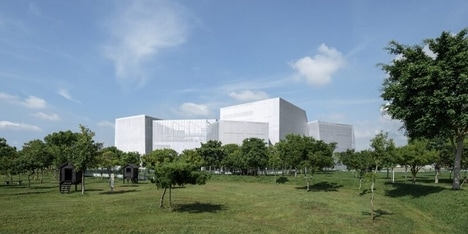
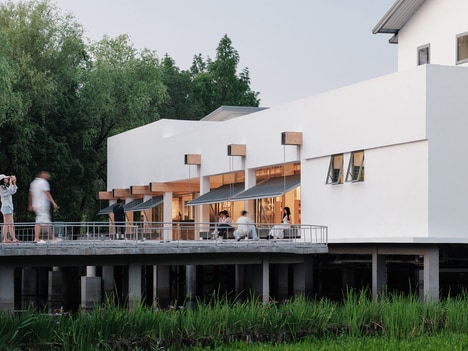
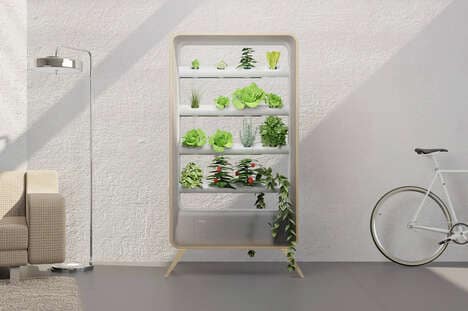
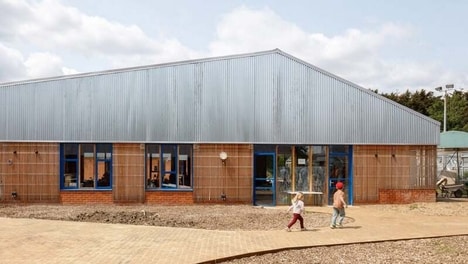
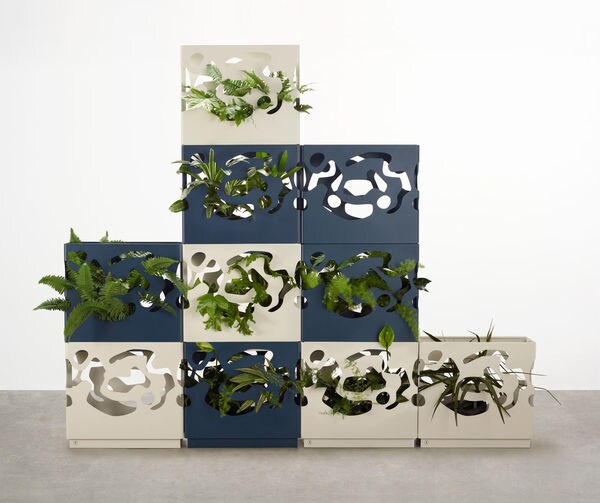
A self-sustaining ecosystem is at the heart of this design by Farming Architects. The structure is located in Hanoi, Vietnam and serves a dual purpose. Its modular wooden grid is broken up by concrete slabs that offer a space for seating and reading. Various items -- like "acrylic boxes, housing lights, planters for growing vegetables and shelving units [with] children's book," are all part of Farming Architects' vision.
The self-sustaining ecosystem utilizes functional aquaponics frameworks. This is a combination of aquaculture and hydroponics. The system reuses the "waste-water from ponds as a nutrient-rich resource for plants," while the vegetation purifies the water and return it to the ponds.
Farming Architects' self-sustaining ecosystem currently produces vegetables, koi carp and makes use of chickens who provide eggs and manure for fertilizing the soil.
Photo Credits: Thai Thach and Viet Dung An
Key Themes Behind This Trend
- Self-sustaining Ecosystems
- Designing structures that incorporate functional aquaponics frameworks to create self-sustaining ecosystems.
- Modular Wooden Grids
- Implementing modular wooden grids in architectural designs to provide versatile spaces for seating and reading.
- Aquaponics
- Utilizing aquaculture and hydroponics systems to create efficient and sustainable farming practices.
Where This Applies
- Architecture
- Exploring the use of modular wooden grids and self-sustaining ecosystems in architectural designs for urban spaces.
- Agriculture
- Adopting aquaponics systems to enhance agricultural practices, promoting efficient resource usage and sustainable farming.
- Education
- Integrating self-sustaining ecosystems into educational spaces, providing hands-on learning opportunities about sustainable farming and ecology.