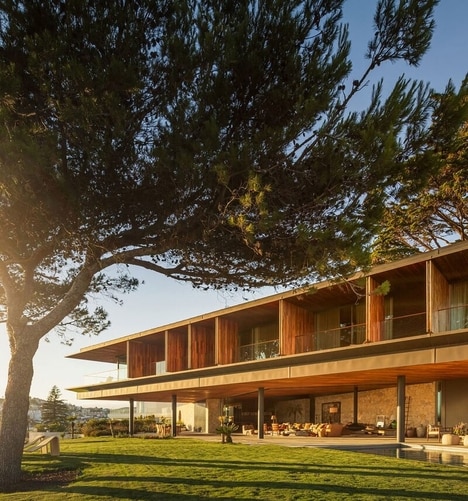
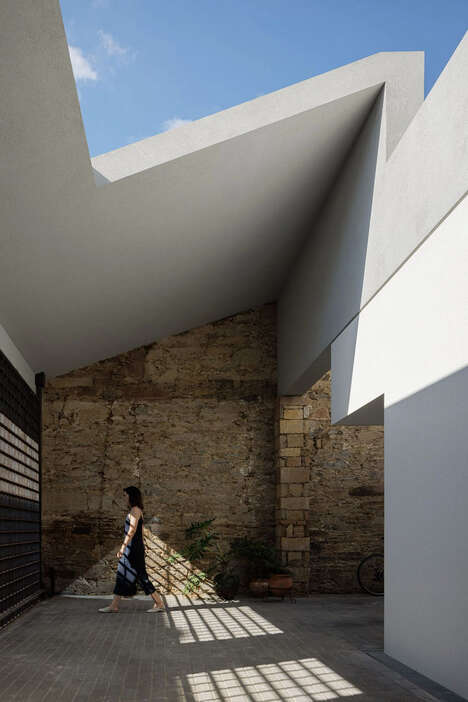
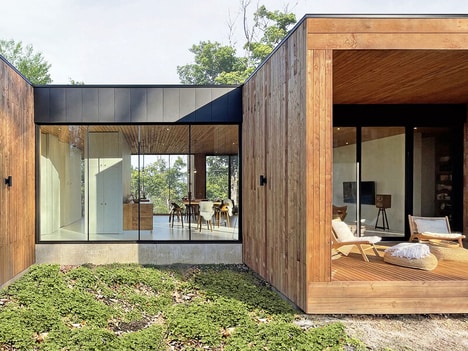
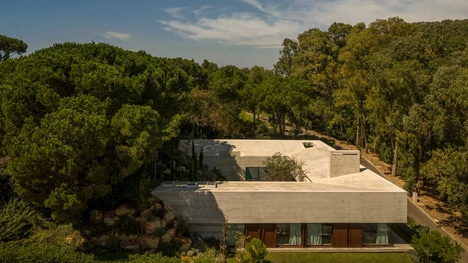
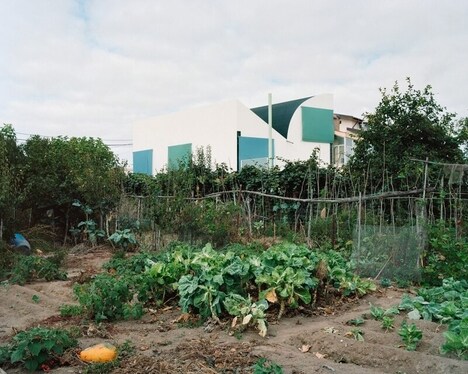
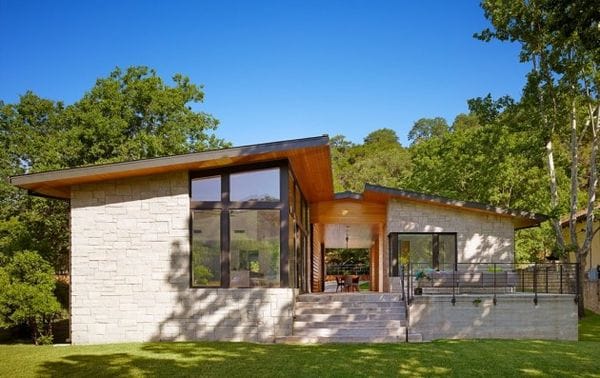
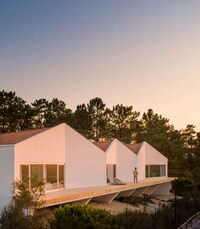
Located in a flat space between two heavily vegetated areas in Odemira, Portugal, The Pe No Monte Rural Tourism site by [i]da arquitectos is the perfect getaway.
Among the earthy, green surroundings, the white facade of the home is immediately attention-grabbing. The stark contrast between architecture and nature is softened by an informal deck area that features imported sand and reclining chairs. This relaxing outdoor space is flanked by a central courtyard equipped with entertainment capacities. It also has the double function of connecting the main house with the service staff house.
Inside, the home is designed around a sense of community. This is evidenced by the naturally lit, communal living areas. Skylights and big windows amplify the brightness of these shared interior spaces.
Why This Trend Is Growing
- Simplistic Rural Tourism
- Creating rural tourism sites that offer simplistic relaxation havens with a focus on community and natural surroundings.
- Contrasting Architecture and Nature
- Exploring the design potential of stark architectural contrasts with the natural environment, creating unique aesthetic experiences.
- Communal Living Spaces
- Designing homes that prioritize communal living areas, increasing social interaction and fostering a sense of community.
Industries Being Reshaped
- Hospitality and Tourism
- The hospitality and tourism industry can create new opportunities by developing rural tourism sites that offer simplistic relaxation havens with community-oriented design elements.
- Architecture and Design
- Architects and designers can explore the use of contrasting elements in their projects, utilizing stark architectural designs to create visually striking spaces that complement the natural environment.
- Real Estate
- Real estate developers can focus on creating homes with communal living spaces, appealing to individuals seeking a sense of community and shared living experiences.