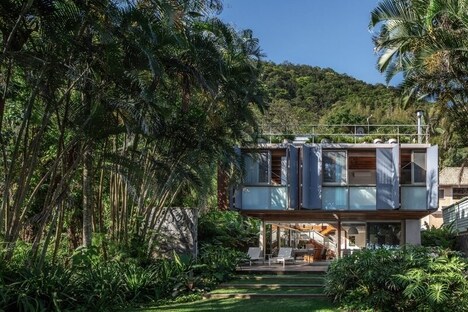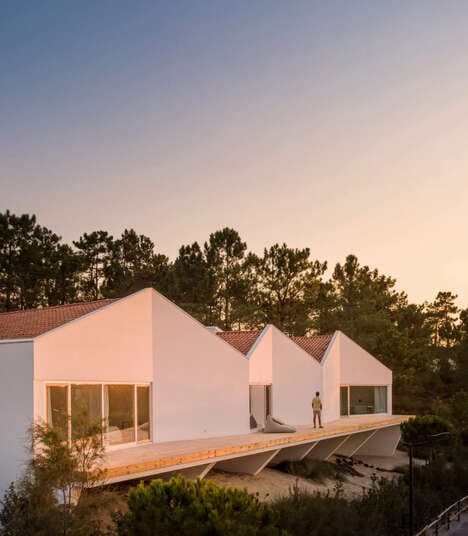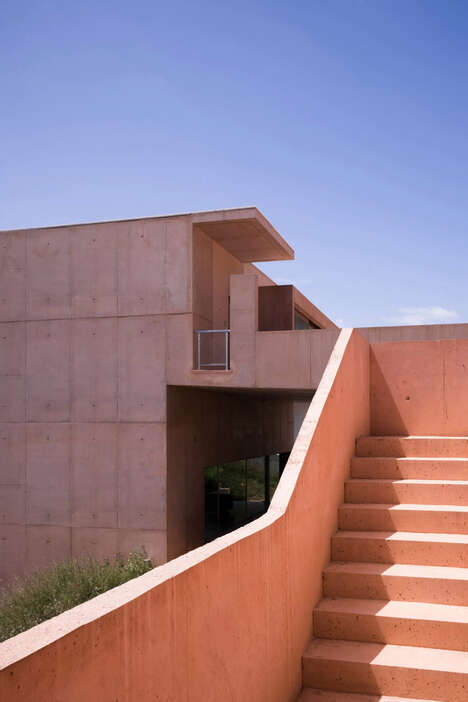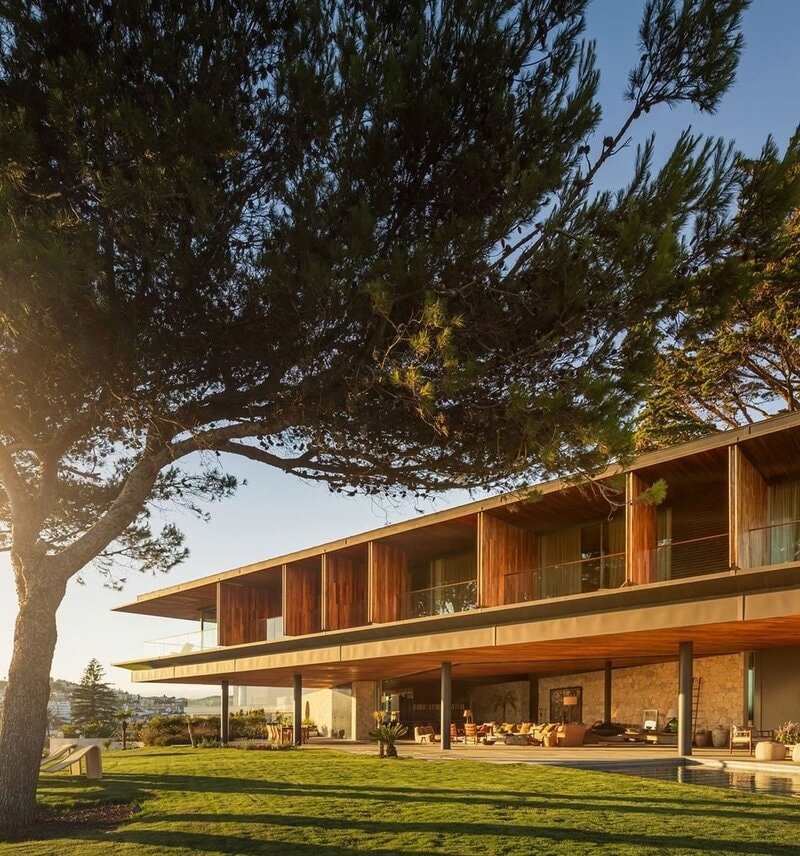
Casa Tejo by Bernardes Arquitetura is situated on a dramatic slope in Oeiras, Portugal, with its angular upper level cantilevered toward sweeping sea views. The 835-square-meter villa acts as a coastal lookout, connecting indoor social spaces with open terraces across multiple elevations. The sloped site allows the main entrance to be placed below street level, framed by a curved concrete ramp and a stone retaining wall that blends into the landscape.
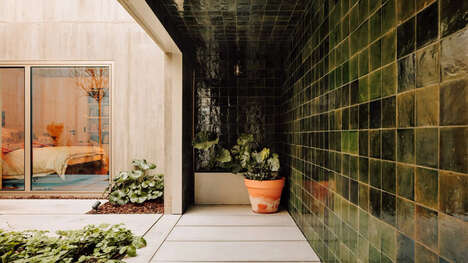
Generous windows and a triangular light well bring natural light deep into the interior. Pale stone walls, timber ceilings, and textured floors create a serene and durable material palette. The bedrooms open to private balconies and terraces, maintaining visual and spatial flow between indoors and out. Casa Tejo captures a Mediterranean spirit with its clean lines, warm finishes, and strong relationship to the surrounding topography.
Image Credit: Fernando Guerra
What's Driving This Trend
- Sustainable Coastal Architecture
- Designs like Casa Tejo illustrate a growing trend towards residential buildings that integrate natural landscapes and expand environmental resilience.
- Indoor-outdoor Living
- Homes that blend interior and exterior spaces offer opportunities for enhanced connectivity with nature and seamless spatial experiences.
- Mediterranean Design Aesthetics
- The use of warm finishes and clean lines mirrors a rising interest in Mediterranean-inspired architecture for its timeless and tranquil appeal.
Who This Affects Most
- Residential Architecture
- Innovations in designing residences that harmonize with their environments present new possibilities for architectural firms focused on sustainable living.
- Real Estate Development
- The demand for homes with panoramic views on unique sites creates novel opportunities for developers aiming to attract luxury buyers.
- Interior Design
- Creative interior design that maximizes natural light and outdoor synergy offers fresh angles for designers catering to eco-conscious clients.