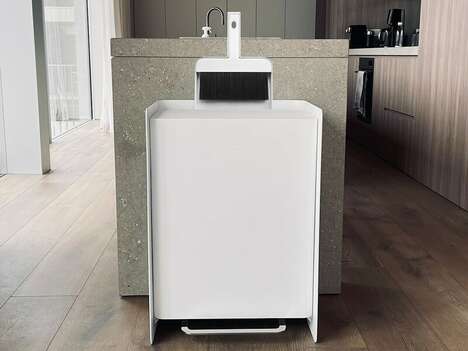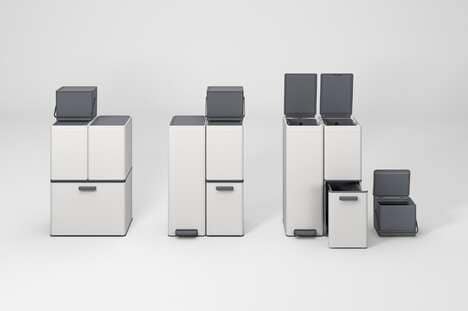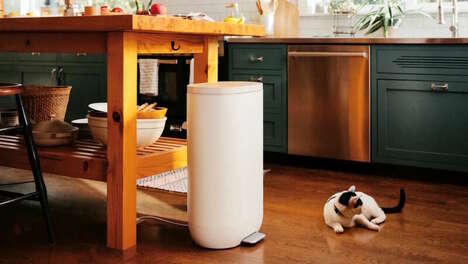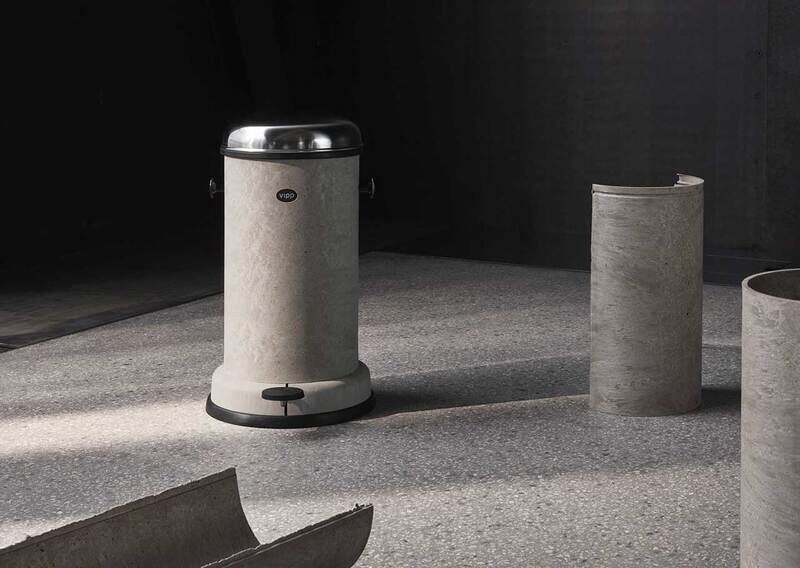
Vipp introduces a new Rubbish Bin that is the newest iteration of the pedal bin originally made in 1939 by Holger Nielsen. It boasts the same shape today but the latest iteration is made from literal rubbish as it is constructed using the company's furniture production waste.
75% recycled materials of industrial plastic leftovers as well as sawdust were gathered to create the bin as well without compromising the look of the original design. Notably, the material of the recycled bin has been locally sourced in Denmark. The plastic gathered is turned into a paste that is then pressed down to be used as a mold. These parts are then glued together and left unpainted for a raw natural look.
Image Credit: Vipp
What's Driving This Trend
- Sustainable Garbage Cans
- The trend of using recycled and repurposed materials for the production of garbage cans presents an opportunity for eco-conscious companies to offer environmentally friendly alternatives.
- Industrial Plastic Recycling
- The trend of using industrial plastic leftovers for the production of everyday goods presents an opportunity for companies to reduce waste and create more sustainable products.
- Circular Economy in Home Goods
- The trend of using waste materials to create new products presents an opportunity for companies to participate in the circular economy and reduce environmental impact.
Who This Affects Most
- Home Goods
- The sustainable garbage bin trend provides an opportunity for companies in the home goods industry to offer eco-friendly alternatives to consumers.
- Waste Management
- The trend of sustainable garbage cans presents an opportunity for companies in the waste management industry to promote environmentally friendly practices and products.
- Furniture Manufacturing
- The trend of repurposing industrial waste for the production of garbage cans presents an opportunity for companies in the furniture manufacturing industry to participate in the circular economy and promote sustainability.