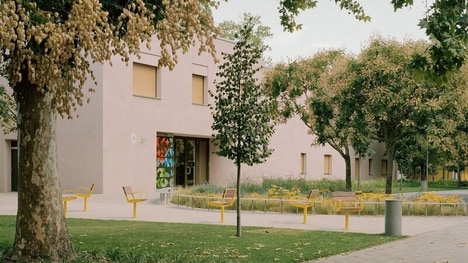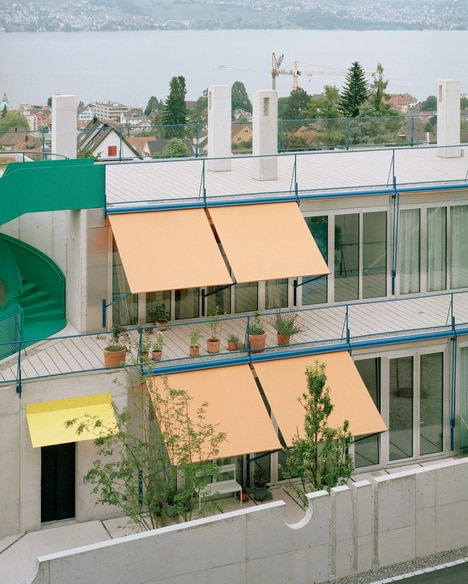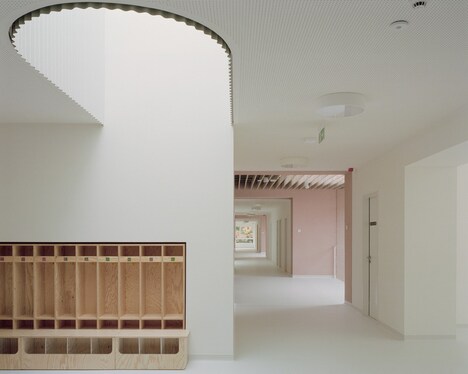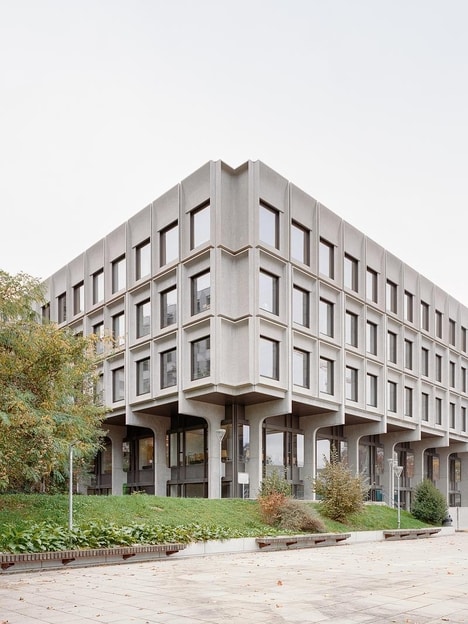
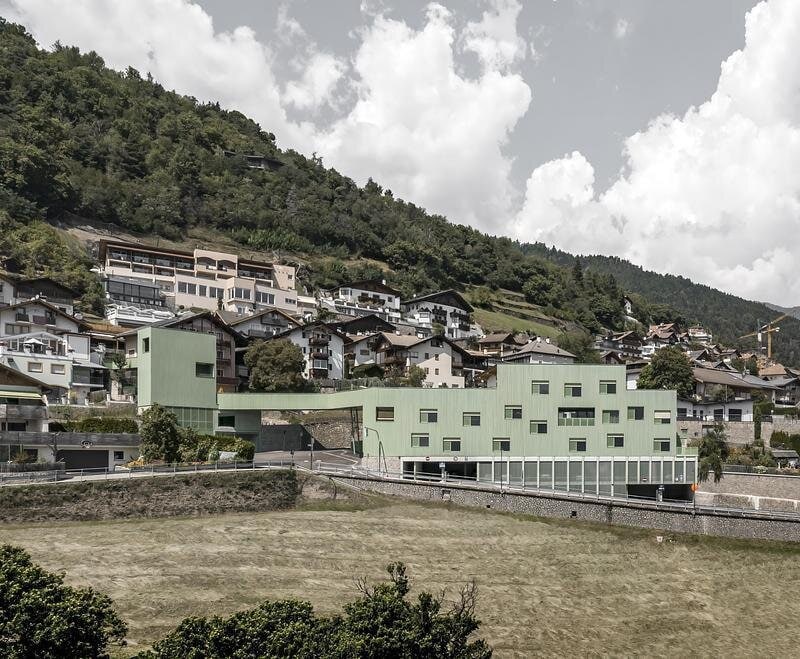
Roland Baldi Architects has completed a monolithic multifunctional building in the South Tyrolean municipality of Barbiano. The integrated complex in question combines a kindergarten, daycare centre, children's restaurant, tourist office, and public infrastructure into a cohesive architectural statement that rethinks rural space through both design and functional innovation.
Roland Baldi Architects' project's most striking feature is its response to the steep slope, which employs a horizontal layering of functions — from technical rooms at the base to educational areas and a roof playground — while a green bridge spanning the street connects the two separate buildings.
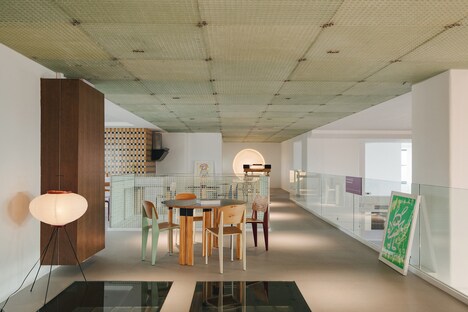
The replacement of traditional classroom typologies with permeable, thematically designed functional areas — including creative and research zones, quiet rooms, and role-play spaces — creates a dynamic learning environment that enriches everyday teaching and appeals to parents and educators seeking progressive educational approaches.
Image Credit: Oskar Da Riz
What Makes This Trend Stand Out
- Multifunctional Civic Hubs
- Consolidated public services within single architectural complexes create efficiencies for rural communities while redefining municipal buildings as shared social infrastructure.
- Layered Learning Spaces
- Flexible educational zones that replace static classrooms introduce new possibilities for child-centered design, experiential pedagogy, and adaptable institutional planning.
- Slope-responsive Architecture
- Terrain-integrated building strategies turn challenging topographies into functional assets, enabling distinctive spatial layouts and expanded public-use surfaces.
Sectors Adopting This
- Architecture and Design
- Monolithic mixed-use complexes signal demand for firms that can merge civic identity, landscape integration, and operational versatility in compact building formats.
- Early Childhood Education
- Progressive daycare and kindergarten environments highlight opportunities for educational models built around exploration, sensory engagement, and spatial flexibility.
- Municipal Infrastructure
- Rural public-sector development benefits from integrated facilities that combine administrative, educational, tourism, and community functions under cohesive design systems.