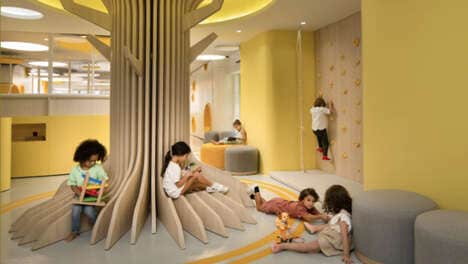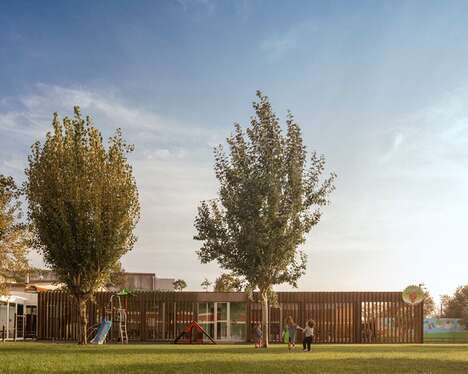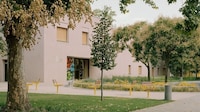

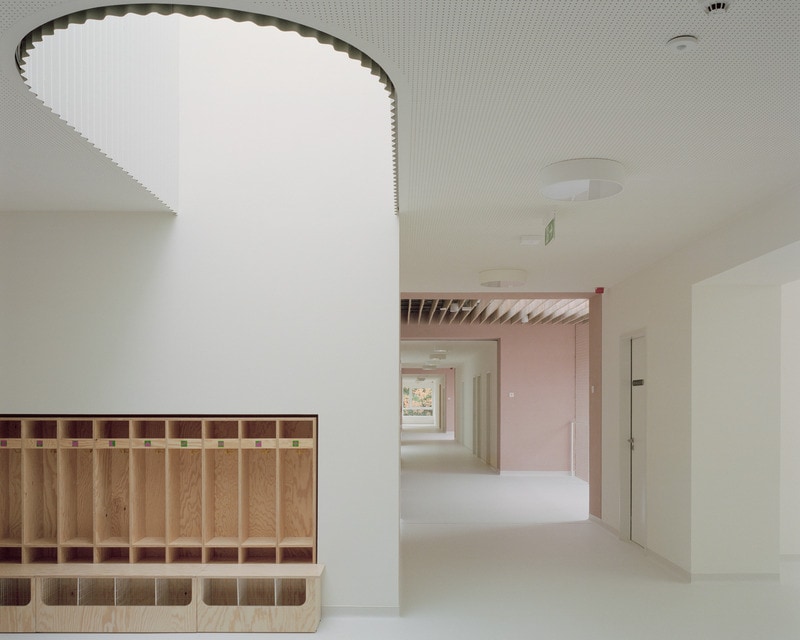
Archikon Architects has completed the transformation of Budapest's Gyöngyszem Kindergarten by converting a deteriorating 1970s prefabricated panel structure into Hungary's first smart educational facility that harmoniously blends sustainable design with digital innovation.
The project preserves the original single-story layout while adding a new floor and mezzanine levels to address previous shortcomings of cramped spaces and poor circulation. In doing so, Archikon Architects creates interconnected areas that encourage social interaction and collaborative learning. The redesign introduces ten classrooms alongside specialized development rooms focused on movement, creativity, and life skills education, arranged around a central courtyard featuring playful, block-inspired furniture that stimulates childhood imagination. A distinctive fire-enamel art installation marks the revitalized entrance, symbolizing the integration of artistic elements with functional architecture.
Beyond physical renovations, the kindergarten incorporates advanced building automation and RFID systems to support modern pedagogical approaches, demonstrating how aging prefabricated structures can be reimagined as energy-efficient, technologically equipped spaces that meet contemporary educational standards.
Image Credit: Balázs Danyi
Why This Trend Is Growing
- Smart Educational Facilities
- The shift towards smart educational facilities is emphasizing the integration of digital innovations with traditional learning environments to create interactive and resource-efficient spaces.
- Sustainable Architecture in Education
- The adoption of sustainable architecture in educational spaces is providing an opportunity to retrofit outdated structures with eco-friendly materials and design, reducing their environmental footprint.
- Interactive Learning Environments
- Interactive learning environments are transforming traditional spaces into dynamic areas that promote collaborative and hands-on learning through innovative spatial designs.
Industries Being Reshaped
- Educational Technology
- The emergence of educational technology is reshaping how learning institutions equip their facilities with digital tools and systems.
- Green Building Solutions
- Green building solutions industry is gradually answering the call for environmentally-conscious design approaches in educational construction projects.
- Interior Design for Education
- Interior design for education is increasingly incorporating elements that foster creative and interactive learning within educational institutions.