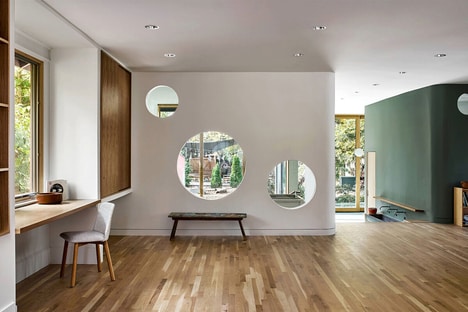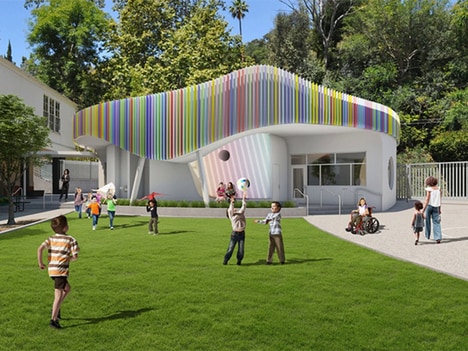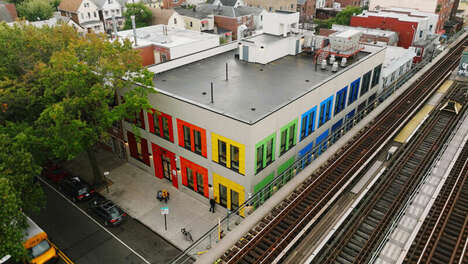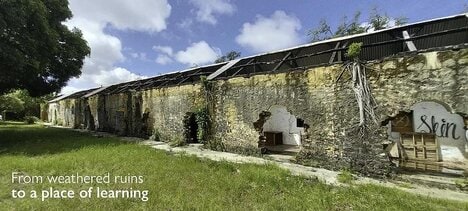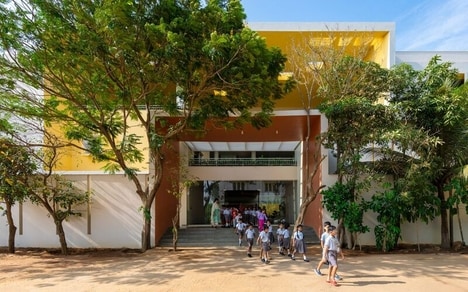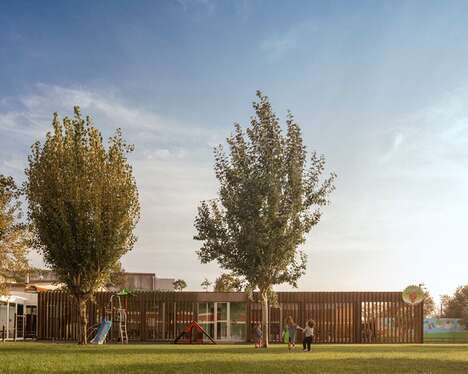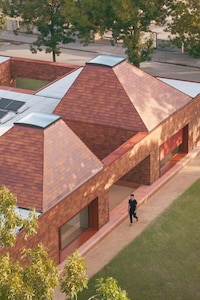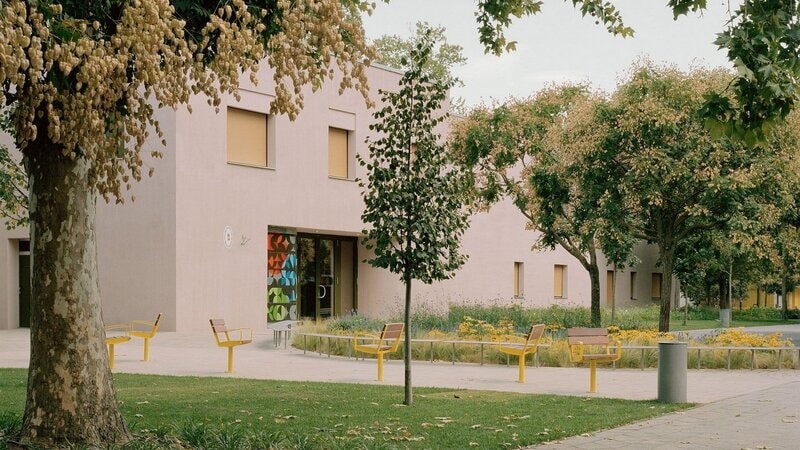
Archikon Architects has renovated Gyöngyszem Kindergarten, a 1970s prefabricated building, into Budapest’s first smart kindergarten. The project retains much of the existing structure while adding a second floor, daylight corridors, and sustainable systems that raise energy performance. The approach preserves continuity for the community while aligning the facility with contemporary educational needs.
The updated layout links ten classrooms with shared activity zones and a central courtyard where a broad stair doubles as play space. Natural light filters through skylights and green roofs, softening transitions between indoors and outdoors. At the entrance, a fire-enamel installation introduces a sense of art and identity to the school. By layering new volumes onto the original form rather than replacing it outright, Archikon demonstrates how renovation can adapt aging public buildings into flexible, future-ready environments.
Image Credit: Balázs Danyi
What's Driving This Trend
- Smart Kindergarten Design
- Innovative designs for kindergartens enable the integration of technology and sustainability into educational environments, creating spaces that are flexible, energy-efficient, and conducive to modern learning.
- Adaptive Reuse in Education
- Transforming existing structures into future-ready facilities without complete demolition showcases how adaptive reuse can meet contemporary educational demands while preserving community heritage.
- Blended Indoor-outdoor Learning Environments
- Designs that incorporate elements like skylights and green roofs promote indoor-outdoor transitions, enhancing natural light and ecological awareness within educational settings.
Who This Affects Most
- Architecture and Design
- The architecture and design industry is ripe for innovation by creating smart, sustainable educational spaces that align with modern pedagogical practices.
- Educational Facilities Management
- Managing and upgrading educational facilities to meet the demands of smart systems and sustainability opens new opportunities for improving student engagement and energy efficiency.
- Green Building Technology
- Advancements in green building technology are crucial for upgrading existing educational structures to be more sustainable and energy-efficient, integrating seamlessly with the natural environment.