Chen Yang and Liwei Guo have developed a visionary concept called Greenterrace Kindergarten. The project has earned the Jury Winner distinction in the 2026 Architizer A+Awards. At its core, the architects propose a fundamental rethinking of early childhood education within the rural context of Yunnan's famed terraced landscapes.
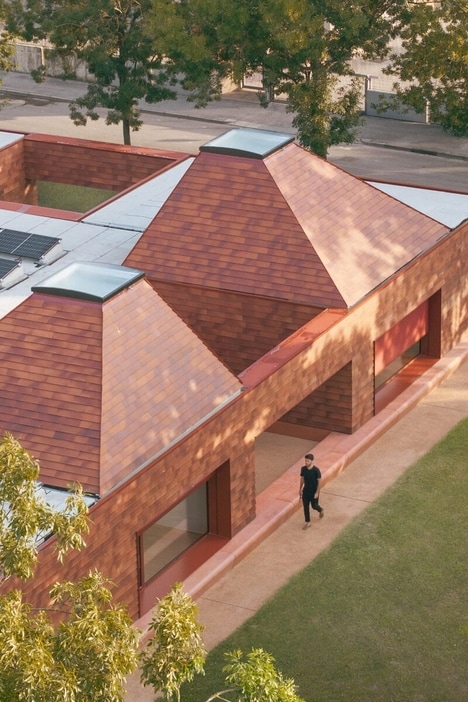
The unbuilt Greenterrace Kindergarten project is essentially an integrated architectural landscape that merges classrooms, play areas, farmers' rest spaces, and ecological learning platforms into a single, continuous form inspired by the stepped topography of its site. The design purposefully avoids the conventional model of an isolated educational institution, instead opting for a curved, layered structure that physically and programmatically connects children with the local agricultural cycles, the seasonal rhythms of the land, and the daily life of the surrounding community.
Image Credit: Chen Yang and Liwei Guo
Key Themes Behind This Trend
- Landscape-integrated Learning
- Educational spaces embedded into local terrain can transform architecture into a participatory curriculum tied to ecology, place, and daily life.
- Community-shared Schools
- Hybrid campuses that combine classrooms with civic, agricultural, and rest spaces create new models for rural education as a shared community asset.
- Agricultural Playgrounds
- Play environments shaped around farming cycles and seasonal landscapes introduce experiential learning formats that bridge childhood development and food systems awareness.
Where This Applies
- Education
- Rural kindergartens designed around environmental immersion signal new possibilities for place-based early learning and culturally relevant pedagogy.
- Architecture
- Design-forward school concepts that merge buildings with productive landscapes expand demand for adaptive, context-sensitive rural infrastructure.
- Agriculture
- Farm-adjacent educational environments create intersections between agricultural communities and child development, positioning working landscapes as informal learning platforms.