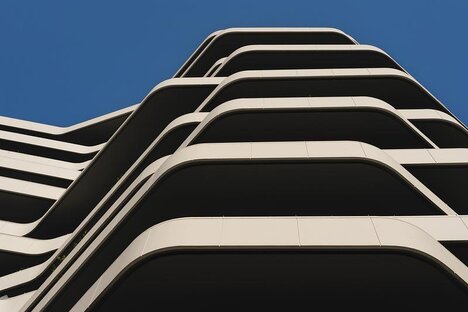
The One Bear Mountain residential development in Langford, British Columbia, represents a distinctive approach to real estate through its adaptive reuse of a previously abandoned concrete structural framework. A collaboration between firms ACDF Architecture and Zeidler Architecture, the project deliberately avoided demolition, instead integrating the existing foundational grid into the new design as a strategy to reduce its environmental impact.
The new One Bear Mountain residential development is, thus, characterized by curvilinear forms that evoke the surrounding mountain topography and the adjacent golf course's contours. Material selection furthers this contextual integration, as the collaborators employed a natural stone base to anchor the building visually to the landscape and upper-level balconies with wood detailing to create a horizontal emphasis. The program includes 209 residential units and an extensive 2,400-square-meter amenity space, featuring a high-level swimming pool, wellness facilities, and lounges designed to promote occupant well-being. The design also incorporates two separate entrances to accommodate different arrival experiences — from a formal lobby to a more pedestrian-oriented access point with landscaped pathways.
Image Credit: Adrien Williams
Why This Trend Is Growing
- Sustainable Architectural Practices
- The adaptive reuse of existing structural frameworks highlights an innovative approach to reducing the carbon footprint in residential developments.
- Contextual Design Integration
- Design elements that seamlessly blend architectural structures with their natural surroundings are emerging as pivotal in modern real estate, enhancing both aesthetic appeal and environmental harmony.
- Wellness-oriented Living Spaces
- The incorporation of extensive amenities focused on well-being reflects a growing trend towards creating residential environments that prioritize health and comfort.
Industries Being Reshaped
- Real Estate Development
- The focus on redefining space through adaptive reuse strategies represents a shift towards more sustainable and resource-efficient practices in the real estate industry.
- Architecture and Design
- An increased emphasis on using natural forms and materials in building design offers a fresh perspective on integrating human-made structures with their environment.
- Wellness and Lifestyle
- The growing demand for residential areas that incorporate wellness-focused amenities is reshaping lifestyle offerings within the housing sector.