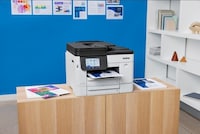

R3 Printing, founded by Paul Sieradzki and Petra Wood, introduced a commercial fused filament fabrication platform featuring systems designed, assembled and tested in the United States. Developed over nearly eight years, the printers were created to address limitations the founders experienced while operating a New York service bureau, with an emphasis on industrial performance, open materials and greater software flexibility.
The R3 Printer supports engineering polymers including nylon, carbon-fibre composites and PPS, while the R3 Ultra is scheduled to ship in late August with support for high-performance materials such as PEEK, PEKK and ULTEM. The Ultra features a 150°C heated chamber and higher-temperature build platform. Both systems emphasize compact footprints, standard-outlet operation and compatibility with third-party materials and open-source slicing software.
For manufacturers and prototyping teams, R3’s approach lowers traditional barriers to industrial polymer printing by combining high-temperature capabilities with greater control over materials and workflows. The lineup reflects growing demand for domestically produced equipment that supports advanced polymers without proprietary ecosystem restrictions.
Image Credit: R3 Printing
Why This Trend Is Growing
- Open-material 3D Printing
- Industrial printers compatible with third-party polymers create room for more flexible supply chains, lower material costs and specialized part performance across production environments.
- High-temperature Desktop Manufacturing
- Compact systems capable of processing PEEK, PEKK and ULTEM signal a shift toward accessible advanced-material fabrication outside large-scale industrial facilities.
- Domestic Additive Equipment
- American-made printer platforms reflect rising interest in localized manufacturing infrastructure that reduces dependency on overseas hardware and closed proprietary ecosystems.
Industries Being Reshaped
- Additive Manufacturing
- Open software and material compatibility are expanding the competitive landscape for industrial 3D printing by enabling more customizable and cost-efficient production workflows.
- Advanced Materials
- Support for engineering polymers and carbon-fibre composites strengthens opportunities for lightweight, durable and heat-resistant components in demanding applications.
- Industrial Prototyping
- Smaller high-performance printers make advanced functional prototyping more practical for teams seeking faster iteration with production-grade materials.