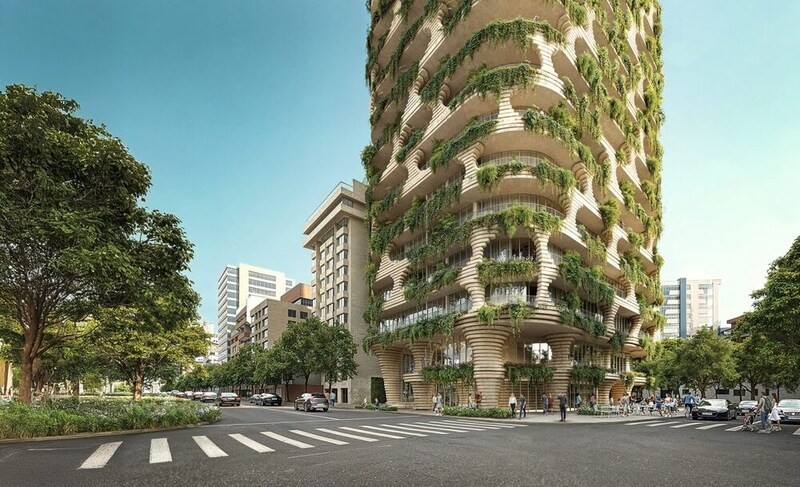
The Qapital by Kengo Kuma is a 32-storey mixed-use tower planned for Quito, Ecuador, developed with Uribe Schwarzkopf. The building includes three ground-floor commercial units and 509 studio residences ranging from 21 to 36.15 square metres. Its textured facade draws from the geology of the Andes, with carved openings forming recessed balconies across each level. These niches are filled with greenery, creating a porous exterior that references how vegetation grows within natural rock formations.
The tower will reach 125.8 metres and is located opposite La Carolina Park in Quito’s central business district. A rooftop terrace includes an outdoor pool finished with a Fornasetti mosaic produced by Bisazza. Amenities include a gym, cinema, gamer room, pet spa, sauna, steam bath, massage room, business centre, and sky terrace. More than 93 percent of units were sold prior to construction, with completion scheduled for 2029.
Image Credit: Kengo Kuma
Key Themes Behind This Trend
- Craft-informed High-rise Facades
- By blending regional ceramic craft techniques with vertical architecture, facades become culturally resonant elements that redefine urban identity and market differentiation.
- Textured Passive Envelope Systems
- Facades designed for dynamic shading and airflow introduce building envelopes that substantially reduce cooling loads and reshape HVAC demand profiles.
Where This Applies
- Residential Real Estate Development
- Projects that integrate craft-led ceramic exteriors present new value propositions for premium urban housing through aesthetic distinction and climate-responsive performance.
- Facade Manufacturing and Materials
- Demand for customizable ceramic components creates opportunities for specialized producers to offer engineered systems combining durability with artisanal finishes.
- Sustainable Urban Construction
- Incorporating passive ceramic envelope solutions supports lower operational energy intensity in dense cities and influences lifecycle carbon accounting for high-rise projects.