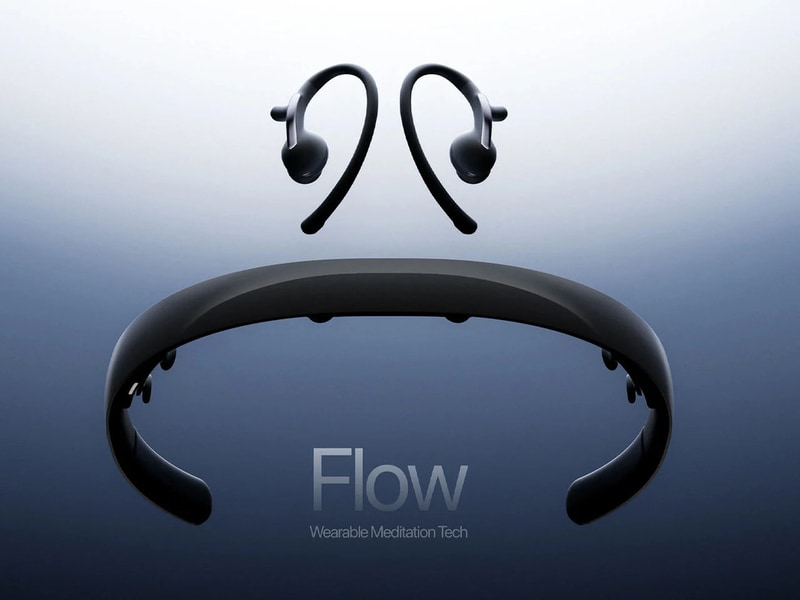
The Flow meditation assistive wearables is a dual-device system developed by Siwoo Kim through Samsung Design Membership, designed to support meditation using real-time physiological data. The system includes StillFlow, a headband equipped with EEG, GSR, and PPG sensors that monitor brainwaves, heart rate, and skin response during sessions. Data is processed continuously to adjust environmental factors such as spatial audio and ambient lighting, which sync to the user’s physical state. A docking station stores and transfers session data while integrating with smart home devices through Matter connectivity.
AirFlow extends the system into a portable format using over-ear wearable earbuds with embedded EEG sensors. These detect alpha and theta brainwave activity to adjust audio output in response to stress or distraction. The charging case functions as an additional sensing device, incorporating GSR and PPG inputs when held in the hand to measure tension and heart rate.
Image Credit: Siwoo Kim
Key Themes Behind This Trend
- Real-time Biofeedback Integration
- Systems that continuously process EEG, GSR, and PPG signals to adapt user experiences present opportunities for devices that personalize cognitive and emotional states on the fly.
- Ambient Environment Synchronization
- Environmental controls like spatial audio and adaptive lighting that sync to physiological markers enable immersive contexts that respond to micro-fluctuations in attention and arousal.
- Portable EEG Consumerization
- Miniaturized EEG sensors embedded in everyday form factors such as earbuds and headbands open possibilities for mainstream neural monitoring outside clinical settings.
Where This Applies
- Consumer Wearables
- Wearable manufacturers could leverage multi-sensor fusion to create differentiated products that deliver personalized wellbeing experiences based on continuous physiological monitoring.
- Smart Home and Iot
- Home automation ecosystems that incorporate biometric inputs can enable contextual living spaces that modulate light, sound, and climate around occupants' mental states.
- Mental Health and Therapeutics
- Clinical and digital therapeutics sectors may integrate adaptive biofeedback tools to provide tailored interventions and objective outcome tracking for stress and attention disorders.