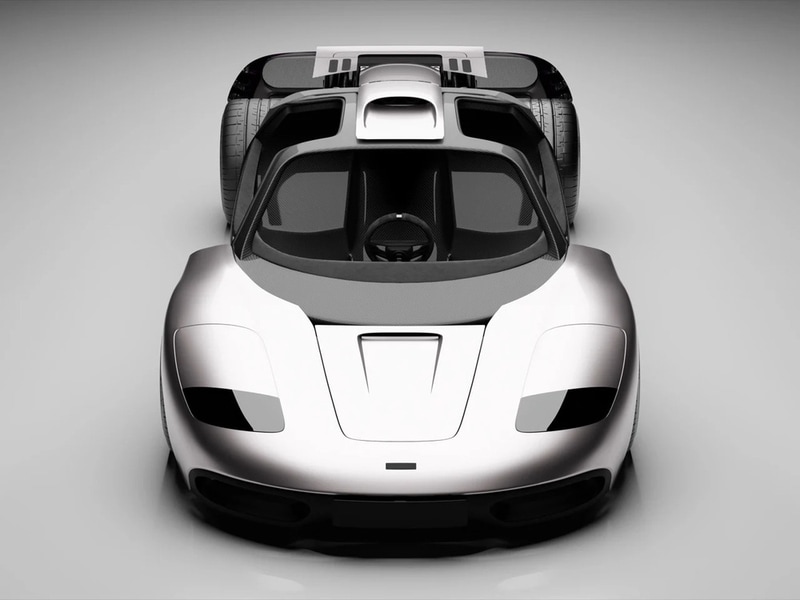
McLaren F1 Reimagined is a concept by Kevin Andersson that reinterprets the original supercar using contemporary materials and engineering references. The design retains the central driving position and three-seat layout, preserving a defining feature of the 1990s model. An exposed carbon fibre monocoque forms the structural base, with visible mounting points for suspension components inspired by Formula One systems. The proportions follow the original with a long front section, cab-forward stance, and pronounced rear volume.
The exterior introduces recessed horizontal headlights, large side air intakes, and upward-opening doors that follow the same motion as the original. Aerodynamic elements include a front splitter, rear diffuser, and a deployable rear wing integrated into the body. Inside, the cabin uses a full carbon structure with a curved digital display spanning the dashboard and two passenger seats positioned slightly behind the driver.
Image Credit: Kevin Andersson
Key Themes Behind This Trend
- Central Driver-seat Revival
- A renewed focus on single-centered driving experiences opens possibilities for bespoke cockpit architectures blending performance ergonomics with immersive controls.
- Exposed Carbon Structural Aesthetics
- Visible carbon monocoques create a market for architecture-driven design languages that merge structural honesty with luxury craft.
- Integrated Aero-active Bodywork
- Body-integrated deployable aero elements suggest vehicles where adaptive aerodynamics are embedded into the visual and functional identity.
Where This Applies
- Automotive Manufacturing
- Reintroduction of three-seat, cab-forward supercars indicates manufacturing shifts toward low-volume, customization-centric production models.
- Advanced Composites
- Growing use of exposed carbon fiber monocoques implies demand for novel composite processes and repair ecosystems tailored to high-performance shapes.
- In-car Digital Interfaces
- Curved panoramic dashboards and driver-centric displays point to immersive HMI platforms that prioritize real-time telemetry and passenger differentiation.