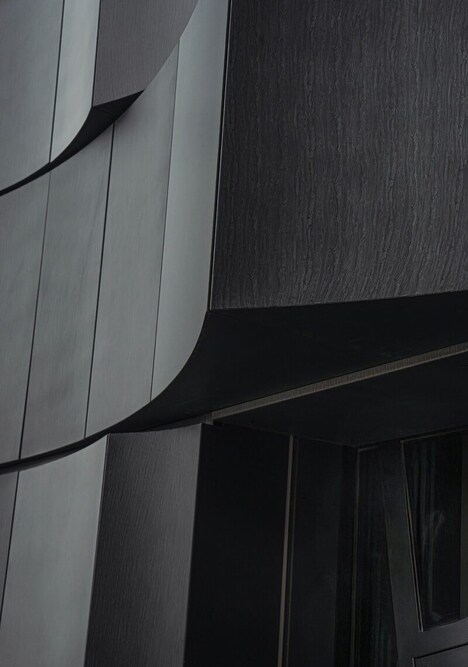
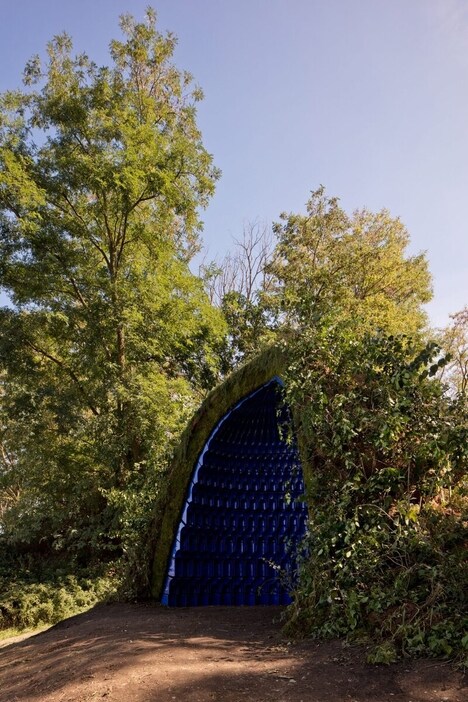
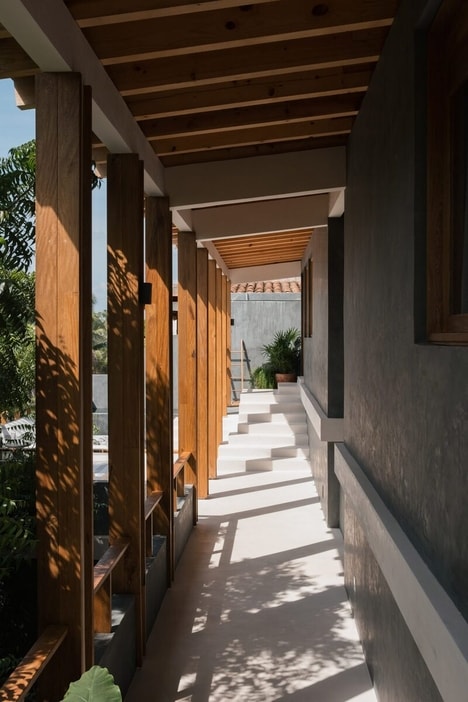
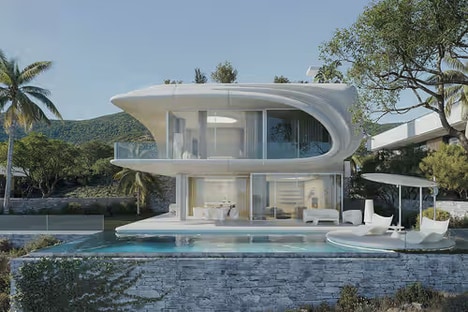
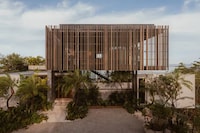
El Arca, a private residential pavilion designed by the Panamanian architecture firm Mallol, presents a compelling case study in site-responsive design. Located high on the slopes of the Volcán Barú in the Chiriquí highlands, this project boasts a meticulously crafted integration of architecture, landscape, and local craftsmanship. The structure is distinguished by its singular curved roof that spans the entirety of the 220-square-meter structure.
El Arca's overarching form is inspired by a dried leaf resting on the forest floor. The silhoeutte serves a dual purpose — it provides essential shelter from the region's frequent rains and shifting climate while establishing a powerful, organic silhouette that nestles within the surrounding cloud forest canopy. The interior is organized on a single level beneath this protective shell, with living, dining, and rest areas oriented to capture views of the cultivated gardens, a mountain river, and the dense, misty woodland.
Image Credit: Alfredo Maiquez
What Makes This Trend Stand Out
- Site-responsive Architecture
- Residences shaped around terrain, climate, and views create new value in highly contextual luxury design and resilient living environments.
- Biomorphic Roof Forms
- Organic structural silhouettes inspired by natural objects signal potential for emotionally resonant buildings that blend performance, shelter, and visual identity.
- Craft-integrated Retreats
- Local materials and artisan techniques embedded into private pavilions elevate regional authenticity while differentiating premium hospitality and residential experiences.
Sectors Adopting This
- Luxury Residential Real Estate
- High-end homes with landscape-integrated forms and climate-aware layouts expand expectations for privacy, wellness, and architectural distinctiveness.
- Architecture and Design
- Firms exploring site-specific pavilions can redefine sustainable aesthetics through structures that respond directly to ecology, weather, and cultural context.
- Eco-tourism Hospitality
- Remote retreat concepts modeled on forest-sensitive residential pavilions point to premium guest experiences rooted in immersion, comfort, and environmental harmony.