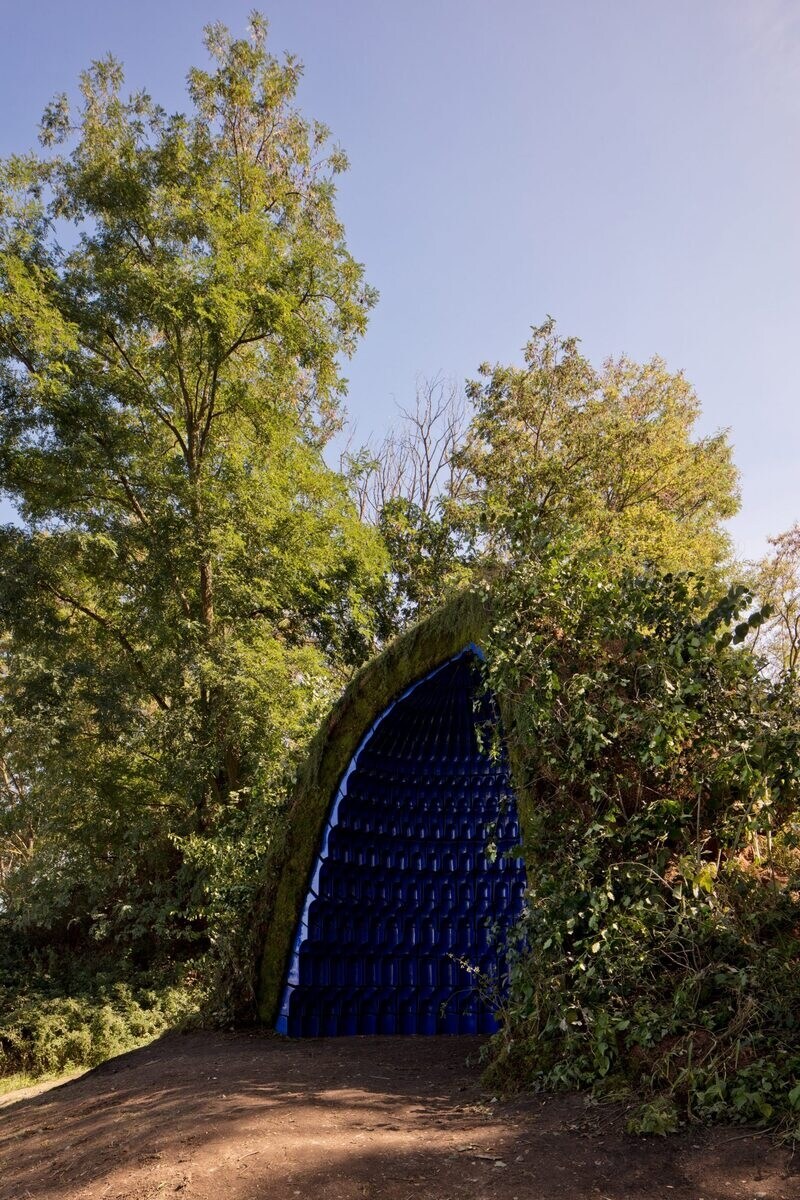
The Muqarnas Pavilion is a freestanding structure built from interlocking ceramic units that reinterpret the traditional muqarnas vault. The design uses a parametric layout to translate the stepped, niche-based geometry into a self-supporting shell composed of repeating modules.
Each piece connects mechanically to its neighbours to form a patterned surface that filters light and creates shifting shadows across the interior. The pavilion sits as an open volume with no enclosed walls, allowing visitors to move through the structure and experience the geometry from multiple angles. The ceramic finish gives the surface a textured appearance while maintaining weather resistance for outdoor installation.
The project was developed for public programming and cultural events, providing a space for exhibitions and small gatherings. The layout balances ornamental complexity with structural clarity by turning a historically decorative system into a load-bearing form. The pavilion presents Islamic architectural language through a contemporary fabrication method, demonstrating how modular ceramic components can create a spatial enclosure without heavy framing.
Image Credit: Jonathan Letoublon
What's Driving This Trend
- Modular Construction Techniques
- These adaptable construction methods offer agile solutions for creating complex shapes with minimal materials, transforming traditional architectural aesthetics.
- Parametric Design Applications
- Parametric design in architecture utilizes algorithms to generate versatile structures, enabling innovative geometries that challenge conventional forms.
- Adaptive Spatial Enclosures
- Pressure on real estate and urban spaces has led to the development of innovative enclosures with elements conducive to public engagement and experiential explorations.
Who This Affects Most
- Ceramic Manufacturing
- Ceramic manufacturing benefits from advanced fabrication techniques that allow for the creation of intricate, modular components enhancing durability and visual appeal.
- Architectural Design Firms
- Architectural design firms can adopt these advanced design strategies to produce iconic structures with symbolically rich forms and sustainable construction practices.
- Event and Exhibition Spaces
- The evolving design of spaces enables these industries to offer transformative environments that enhance visitor interaction and cultural expression.