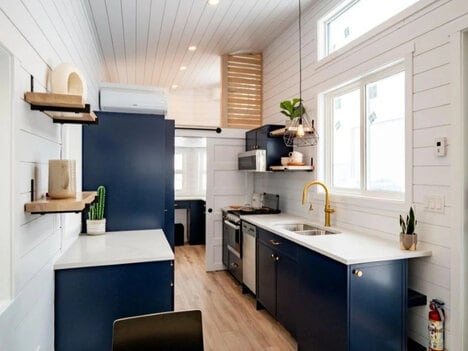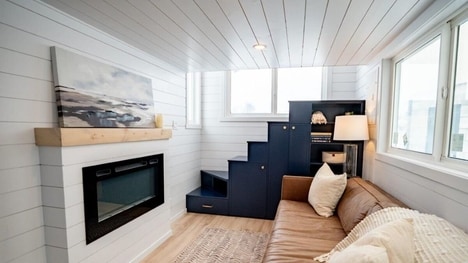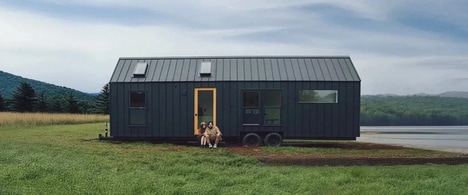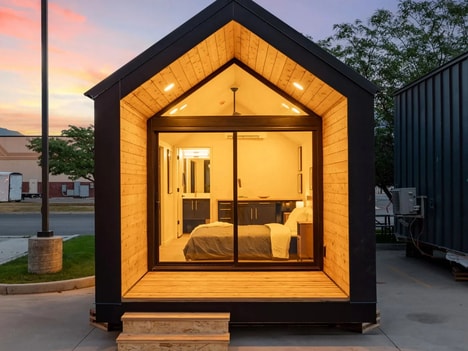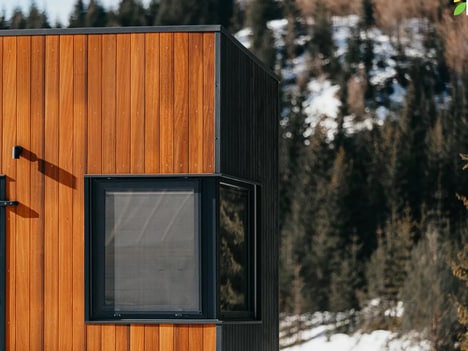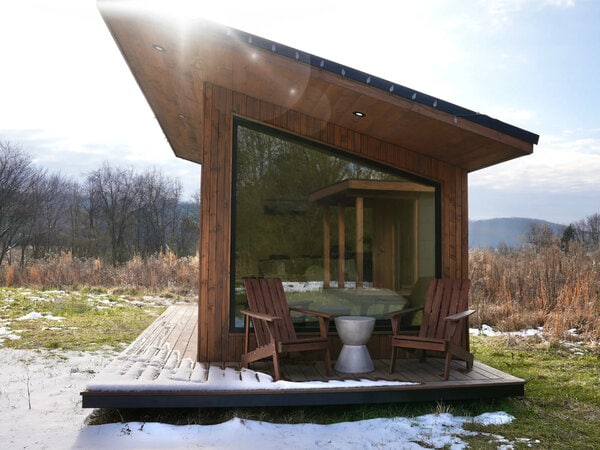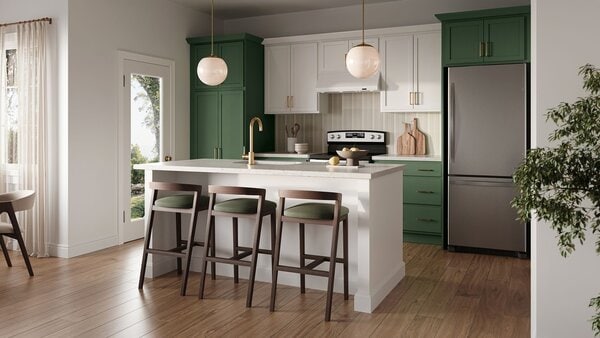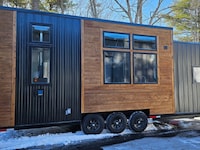
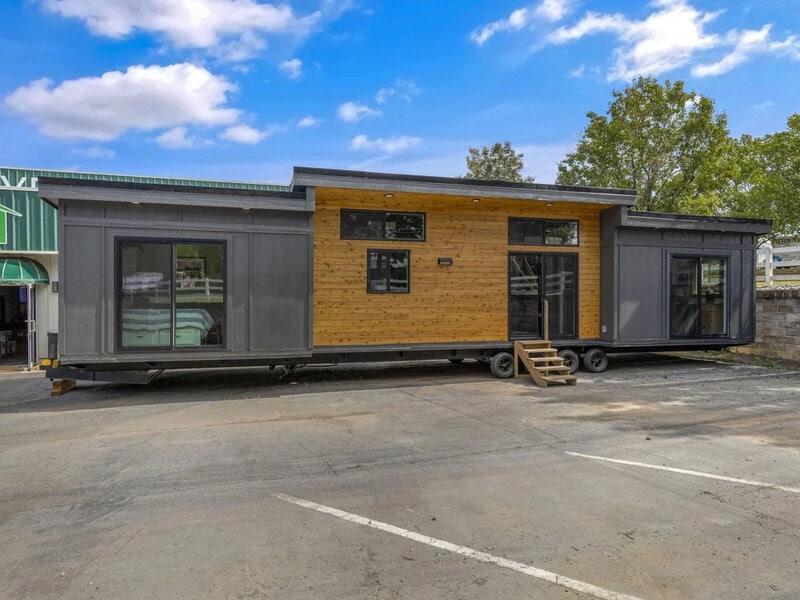
Sweet-Haus Tiny Cabin Company's 'Acadia' offers small-home buyers two bedrooms, each with a full bath, avoiding the usual loft tradeoffs. The 700-square-foot home sits on a quad-axle trailer, and its 13.6-foot width places it in park-model territory for residents who want a place to stay put.
Argon-filled, black-framed windows admit daylight while helping temperatures stay steadier, and each bedroom opens to its own full bath. That setup eases the usual squeeze of compact living, especially when two people are sharing the home.
At $176,500 MSRP, the model offers a house-like take on tiny living rather than a stripped-back getaway unit. HUD certification also broadens financing choices and can make community siting easier in South Carolina and North Carolina. Together, the MSRP and HUD status put Sweet-Haus closer to everyday housing than to vacation-cabin territory.
Image Credit: Yanko Design - Modern Industrial Design News
What's Driving This Trend
- Two-suite Tiny Homes
- Compact dwellings with dual bedrooms and private bathrooms signal a shift toward shared small-space living that preserves comfort and privacy.
- Hud-certified Micro Housing
- Certification-backed tiny homes expand the category from niche cabins into financeable housing products suited for regulated communities.
- Park-model Permanence
- Wider trailer-based homes blur the line between mobile units and stationary residences, creating new appeal for buyers seeking affordability without constant relocation.
Who This Affects Most
- Modular Housing
- Factory-built home providers can differentiate through residential-grade layouts that make compact square footage feel more permanent and livable.
- Real Estate Development
- Community operators gain new formats for attainable housing by integrating park-model homes into planned neighborhoods and long-stay sites.
- Consumer Finance
- Lenders encounter growing demand for loan products tailored to certified tiny homes that sit between recreational vehicles and traditional houses.