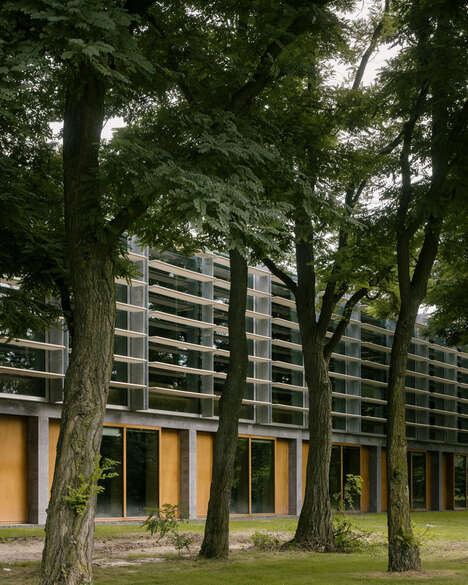
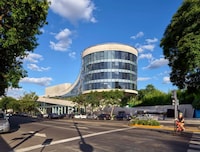
The Pirelli 35 Office Building represents a groundbreaking collaboration between Park Associati and Snøhetta that redefines urban regeneration through its innovative adaptive reuse of a 1960s Milanese office tower. This 27,000-square-meter transformation in Milan's Porta Nuova district demonstrates how strategic architectural interventions can breathe new life into existing structures while dramatically reducing environmental impact.
The design team's decision to preserve and enhance the original concrete skeleton rather than demolish it significantly lowered embodied carbon emissions compared to new construction. The project's most striking intervention is the removal of the central wing to create a suspended volume above a new public courtyard. This architectural decision transforms what was once an insular corporate block into a porous urban connector that actively engages with the surrounding cityscape. Material selections like terracotta-hued metal cladding and concrete-effect finishes create a thoughtful dialogue between the building's mid-century origins and its contemporary reinvention, while large glazed openings enhance visual connectivity between interior workspaces and the newly activated public realm.
Image Credit: Barbara Rossi
Why This Trend Is Growing
- Adaptive Reuse Architecture
- Transforming outdated structures into vibrant spaces places a spotlight on sustainability and reduced carbon footprints in urban development.
- Urban Regeneration
- Revitalizing neglected city areas through innovative design can create dynamic urban environments that foster community engagement.
- Sustainable Building Practices
- Focusing on material reuse and carbon reduction offers a blueprint for environmentally conscious construction.
Industries Being Reshaped
- Architecture and Design
- The intersection of historical preservation and modern innovation is reshaping how structures are conceived and renovated.
- Real Estate Development
- Developers can harness adaptive reuse to enhance property values and attract eco-conscious tenants.
- Sustainable Materials Manufacturing
- Growth potential exists for producing innovative materials that align with ecological and aesthetic goals in building projects.