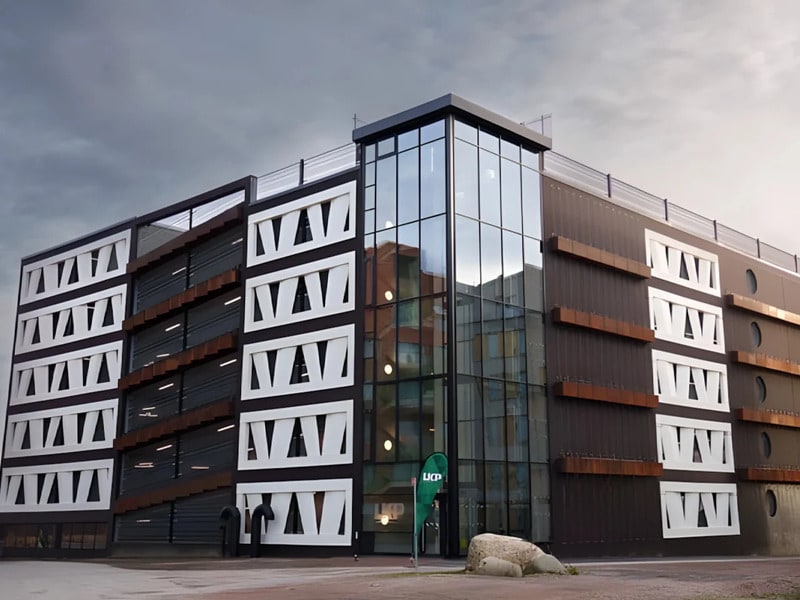
The Niels Bohr car park is a parking structure in Sweden constructed using decommissioned wind turbine blades as primary building components. The project addresses the challenge of disposing of composite turbine blades by repurposing them into structural and façade elements. Long blade sections are cut and arranged to form beams, screens, and shading devices, with their curved geometry shaping the building’s visual identity. Rather than concealing the material, the design highlights the blades’ original form, allowing their industrial origin to remain visible within the architecture.
The car park accommodates standard vehicles and integrates circulation routes, lighting, and safety features consistent with contemporary infrastructure requirements. By reusing large composite elements, the project reduces landfill waste and avoids energy-intensive recycling processes typically associated with turbine blades.
Image Credit: Jonas Lloyd
Why This Trend Is Growing
- Sustainable Architecture
- Incorporating decommissioned turbine blades into construction methods offers a sustainable solution for reducing landfill waste while introducing unique architectural aesthetics.
- Circular Economy Practices
- Utilizing retired materials like wind turbine blades showcases potential advancements in circular economy strategies, emphasizing material reuse over traditional waste disposal.
- Visual Upcycling in Design
- Highlighting the industrial origin of reused materials within building design encourages new forms of visual storytelling and innovation in architectural practices.
Industries Being Reshaped
- Renewable Energy
- The renewable energy sector may find new avenues for the lifecycle management of wind turbine components through architectural repurposing.
- Waste Management
- Innovative applications of retired materials open opportunities for waste management industries to expand services focused on material recovery and transformation.
- Construction and Infrastructure
- Construction industries can explore the integration of unconventional materials like turbine blades to foster eco-friendly building practices and designs.