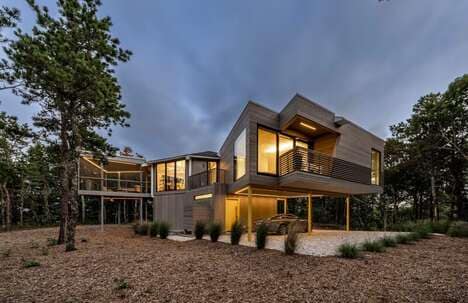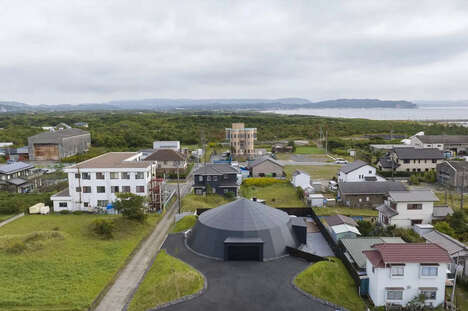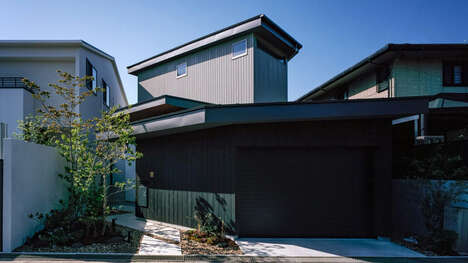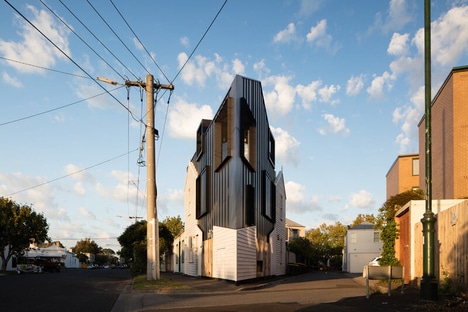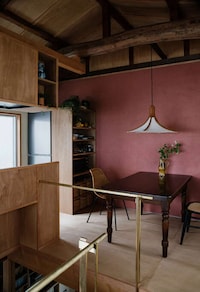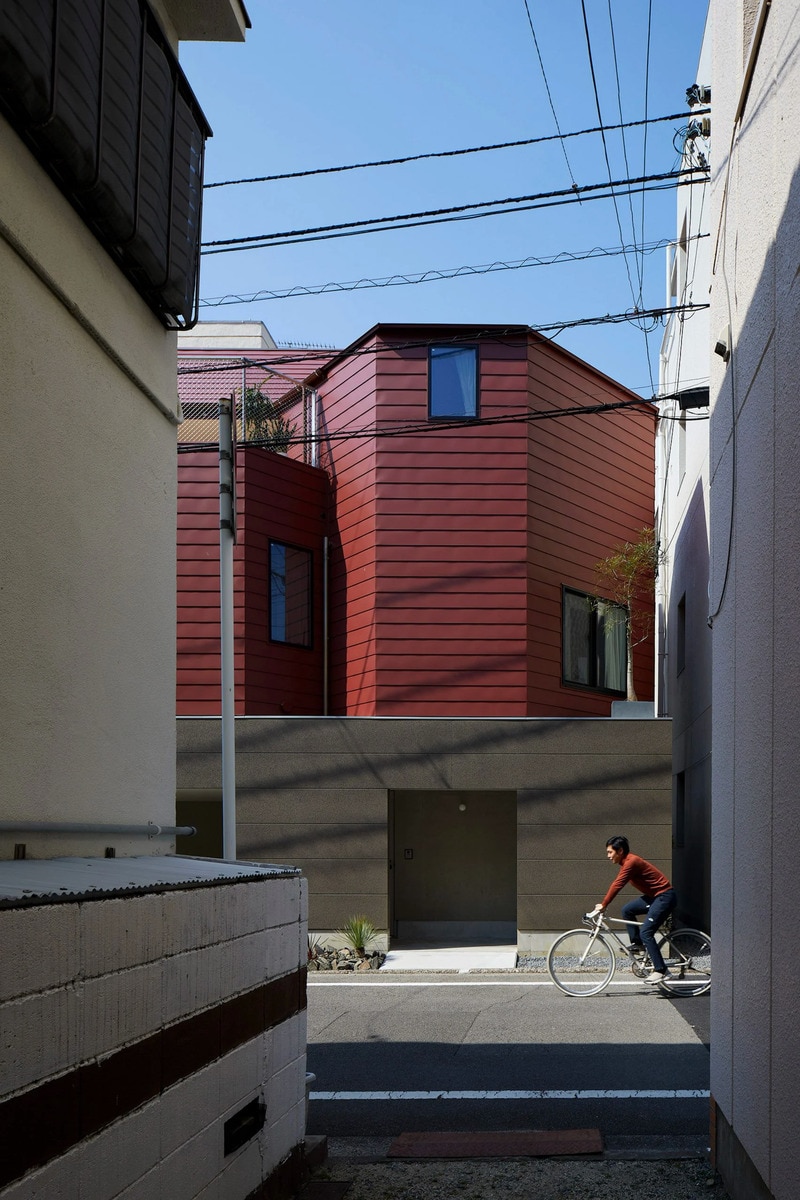
Architecture firm Marutau Arqui has completed the Octa House, which is nestled on Shikoku Island in Japan. It is defined by a multi-faceted red facade and it is made up of two overlapping octagons. The design project was created by the design team for a local family with three children.
The plot is surrounded by high-rise buildings and is built on what was once a car parking lot. The founder of Marutau Arqui, Yoko Okegawa explained that bright and vibrant hues were chosen to bring "warmth, softness, and identity" to the home. "We proposed a brick color that is familiar to people in Japan and blends in well with the streetscape, yet does not blend in with its surroundings and expresses a strong sense of presence."
Image Credit: Toshiyuki Yano
What's Driving This Trend
- Urban Space Reclamation
- Transforming underutilized parking lots into residential spaces represents a shift toward more sustainable and efficient urban planning.
- Octagonal Architecture
- The use of overlapping octagonal structures introduces a novel geometric approach in residential design, breaking traditional architectural norms.
- Color-integrated Design
- Incorporating locally significant colors into modern architecture serves as a way to harmonize new homes with their historical and cultural environments.
Who This Affects Most
- Sustainable Urban Development
- This trend involves repurposing existing urban plots, such as parking lots, for residential use, reducing environmental impact and promoting space efficiency.
- Residential Architecture
- Innovative housing designs, including unique facades and shapes, are revolutionizing traditional approaches to building homes.
- Cultural Design Integration
- Architects are increasingly blending local heritage and iconic aesthetics into modern structures to preserve cultural identity within contemporary architecture.