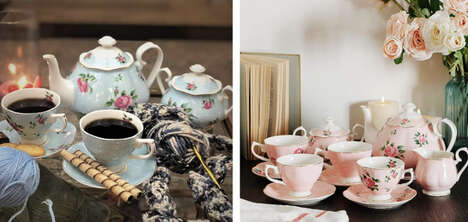
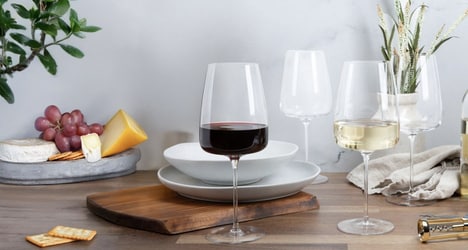
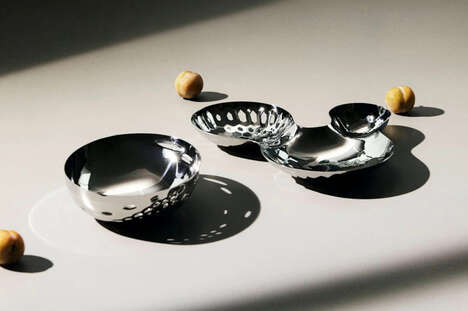
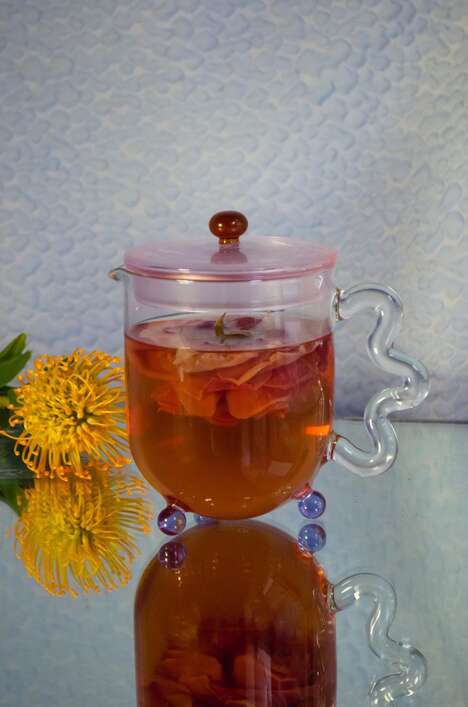
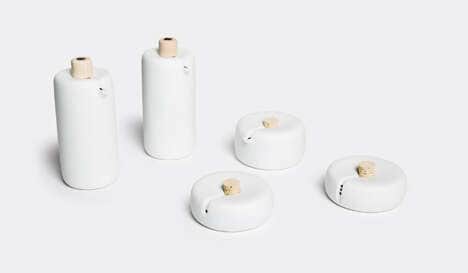
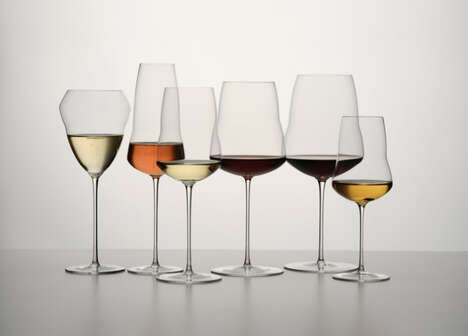
British Architect Norman Foster crafted a tea set for Danish label Stelton using a blend of materials including porcelain, glass and stainless steel. The collection offers a selection of tableware used for evening usage such as wine goblets, bowls, a carafe, and a tray. There is also a broadened selection of sugar bowls, thermos flasks, water jugs, and coffee cups, crafted from both porcelain and glass. Although there is a difference in materials used, when they are put together, the shapes take a soft and round silhouette. Foster uses the term "power of the curve" to describe this result.
Norman Foster's wine glasses are coated with a stainless steel exterior, with an inner surface resembling a golden color due to a copper-tinged. The tray's bottom is copper and the surface is a mirrored silver color with a fluid structure. The bowl's unique design takes on an asymmetrical shape with a wider rim. All of the pieces will be at the Ambiente trade fair for display in Frankfurt until February 13.
Image Credit: Norman Foster
What's Driving This Trend
- Blended Materials
- The use of a blend of different materials in product design offers opportunities for unique aesthetics and functionality.
- Multi-purpose Tableware
- Designing tableware that serves multiple functions provides innovative solutions for versatile dining experiences.
- Fluid Structures
- Creating products with fluid and dynamic structures opens up possibilities for visually striking and aesthetically pleasing designs.
Who This Affects Most
- Home Decor
- The home decor industry can explore the use of blended materials to create distinctive and eye-catching products.
- Hospitality
- The hospitality industry can benefit from multi-purpose tableware to enhance guest experiences and optimize space usage.
- Luxury Goods
- The luxury goods industry can leverage fluid structures to create high-end and artistic products that appeal to affluent consumers.