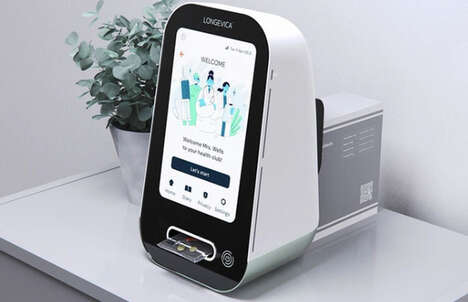
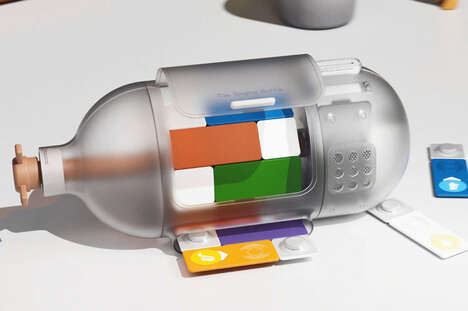
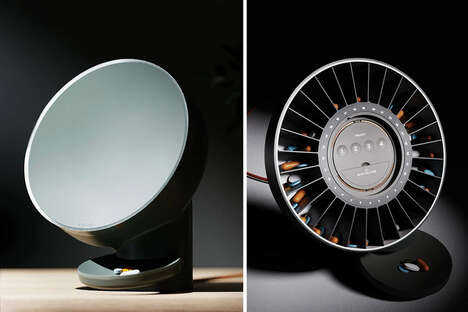
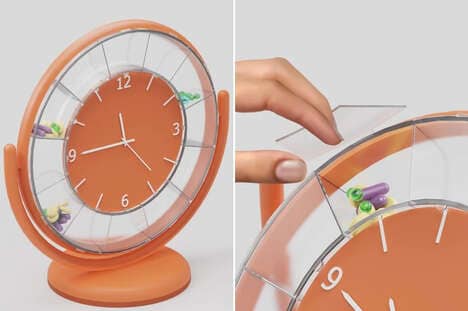
While technology can help elderly people with multiple prescriptions handle their medication regimes, Method, the London-based design firm behind the Nightingale system, recognized that many elderly people can be resistant to tech advancements.
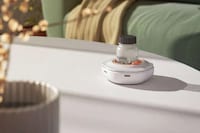
Wearables make sense for younger generations, but seniors are often hesitant to respond to a wristband that gives them reminders. Instead the Nightingale system uses glowing LED lights placed at strategic points around a person's home, illuminating their everyday objects as gentle reminders to take medications. Thus, rather than a buzzing wristband or a ringing app, the Nightingale system incorporates pill-taking into its users daily routine, eventually encouraging habit-formation and less reliance on third-party reminders.
The system also comes with a chatbot called "Flo" that tracks whether a user is taking their pills (via a device placed on the cap of pill bottles) and acts as an intuitive guide to medication advice. In all, the Nightingale system could represent a happy medium between fully integrated IoT and a tech-free environment by actively weaning its users off of its own service.
Why This Trend Is Growing
- Elderly Medication Assistance
- Assistance for elderly individuals to remember to take their medication in an unobtrusive manner.
- Non-invasive Medical Technology
- Medical technology that does not require invasive devices or apps.
- Intuitive Medication Guidance
- Use of chatbots to provide intuitive guidance to individuals on taking medication.
Industries Being Reshaped
- Healthcare Technology
- The healthcare technology industry could develop solutions that are less obtrusive than wearables to help the elderly.
- Pharmaceuticals
- The pharmaceutical industry could develop medication packaging that automatically notifies users when it's time to take pills.
- Home Automation
- The home automation industry could create systems that remind individuals to take medication without relying on wearable tech.