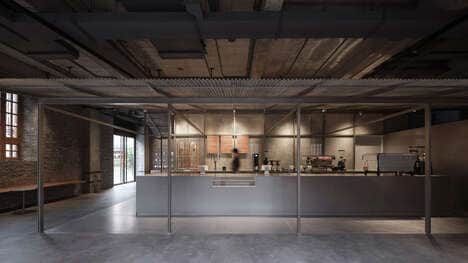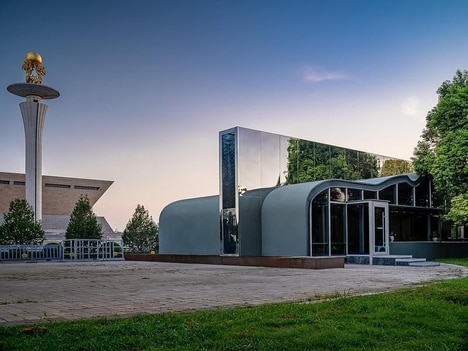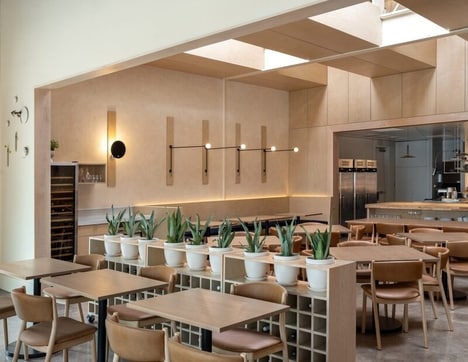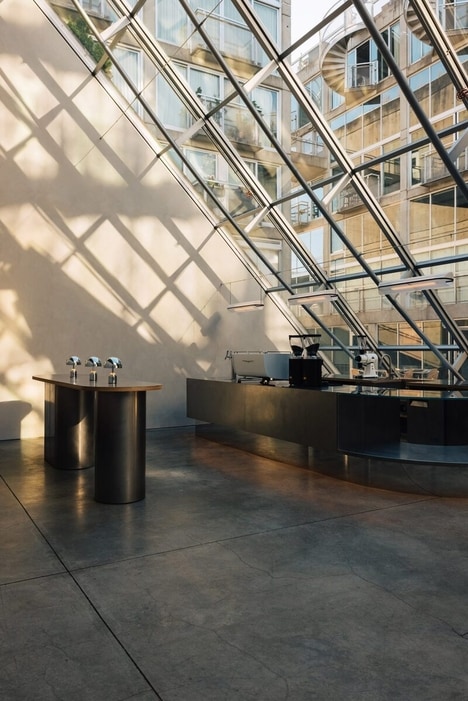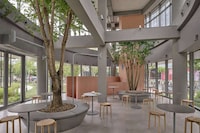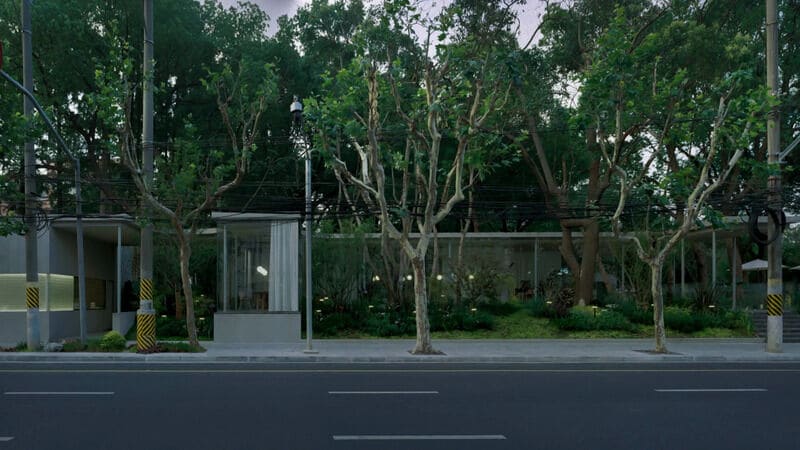
Chinese design studio Offhand Practice has finished the Mei Yuan Cafe in Shanghai. It is a glass-walled pavilion space that allows visitors to truly immerse themselves in the experience. The cafe has a slender structure made from white steel and glass to boast a minimal impact on the environment it is nestled in.
The studio explains, "We envisioned the cafe as a friendly interface connecting the community and the park, therefore we chose pavilion as the architectural form, hoping to achieve a delicate balance between permeability and shelter. The use of floor-to-ceiling glass, ubiquitous grey bricks, and understated textured paint clearly convey our original intention: to create a shelter where people can immerse themselves in nature."
Image Credit: Hu Yanyun
What Makes This Trend Stand Out
- Glass-pavilion Architecture
- Increasingly popular are glass-pavilion designs that integrate indoor spaces with their natural surroundings, providing an immersive experience for patrons.
- Minimal-ecological Footprints
- More establishments are prioritizing eco-friendly designs with minimal ecological footprints, using sustainable materials such as white steel and glass.
- Community-centric Spaces
- Design studios are crafting spaces that serve as interfaces between the community and the environment, enhancing social connectivity and engagement.
Sectors Adopting This
- Architecture and Design
- The evolution of architecture that combines minimalistic aesthetics with eco-sensitivity is transforming how public spaces are designed.
- Café and Dining
- Innovative café designs featuring transparent, immersive environments are reshaping consumer expectations and experiences in the dining industry.
- Urban Development
- Urban development is increasingly incorporating green, community-focused architecture to foster better societal interactions and well-being.