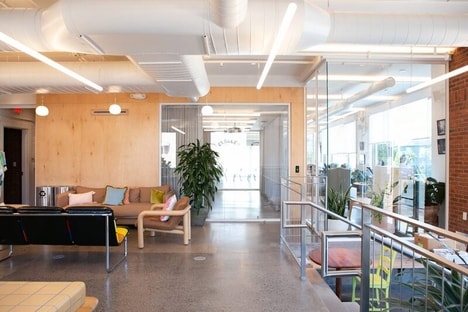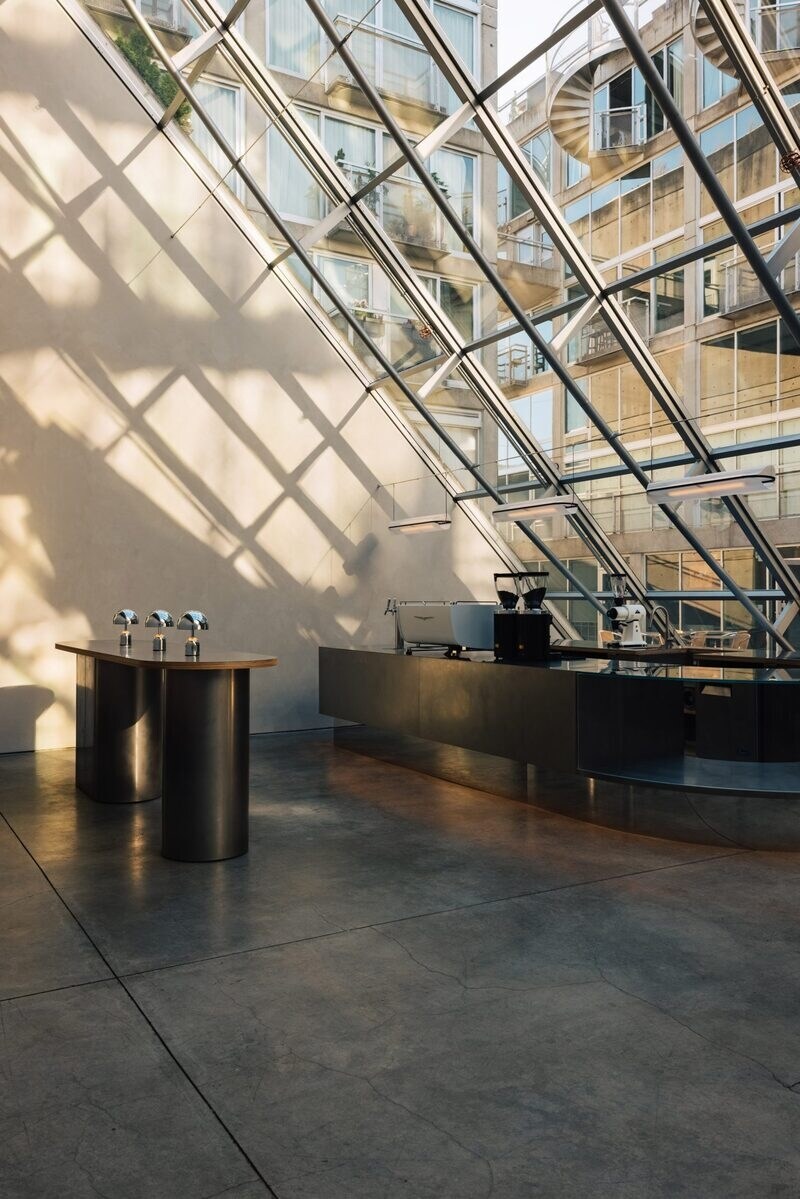
Ellipsis Cafe Bar by SML Studio redefines how architecture and movement can coexist within a dense urban context. The three-story structure incorporates a cascading water feature that flows across its glass façade, turning the building into a living surface that reflects light and movement. The design uses steel, glass, and concrete to express contrast and fluidity, transforming a small city lot into an immersive visual experience. The result feels both urban and organic, merging rhythm and reflection within a minimal framework.
The ground level opens directly to the street, linking the café to its surrounding neighborhood. A mezzanine bar above offers framed views of the falling water, creating a sensory dialogue between sound and structure. Ellipsis Cafe Bar invites visitors to pause and observe, revealing how architecture can capture serenity amid the momentum of city life.
Image Credit: James Han
What Makes This Trend Stand Out
- Sensory Architecture
- Buildings that incorporate dynamic elements like water features create immersive experiences that blend urban spaces with natural rhythms.
- Fluid Urban Design
- Integrating fluid elements into building facades fosters a new aesthetic that enhances interaction between structure and environment.
- Reflective Surfaces in Construction
- Transparent and reflective materials transform structures into living canvases that interact with light and surroundings.
Sectors Adopting This
- Architecture
- Innovative architectural designs are embracing natural elements to create spaces that foster experiential engagement in dense urban landscapes.
- Urban Planning
- The trend towards integrating nature into cityscapes opens new avenues for reimagining how urban environments coexist with the natural world.
- Construction Materials
- The demand for advanced materials that support both aesthetic and functional fluidity in buildings is rising as urban centers seek more interactive designs.