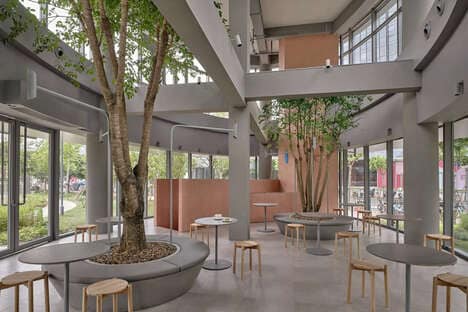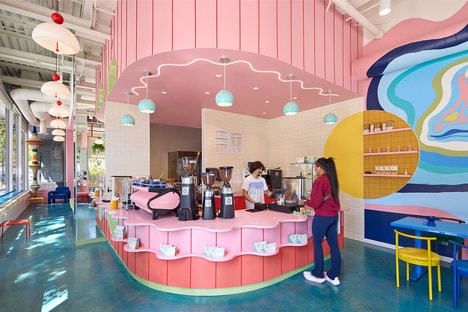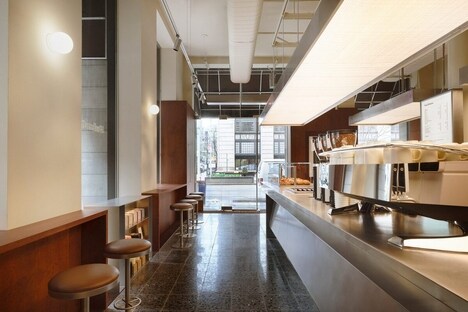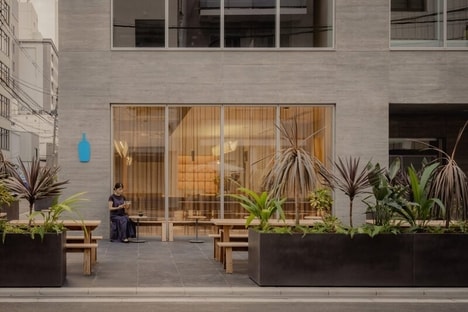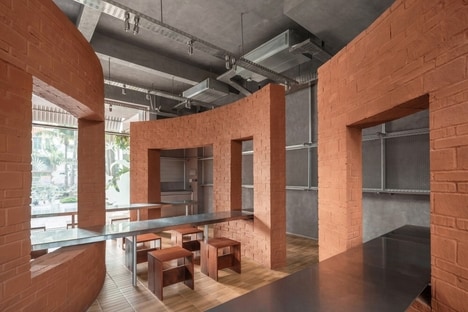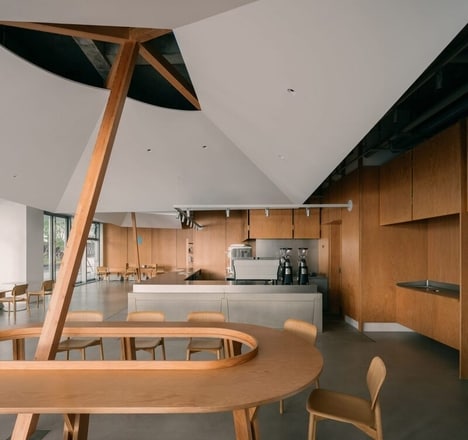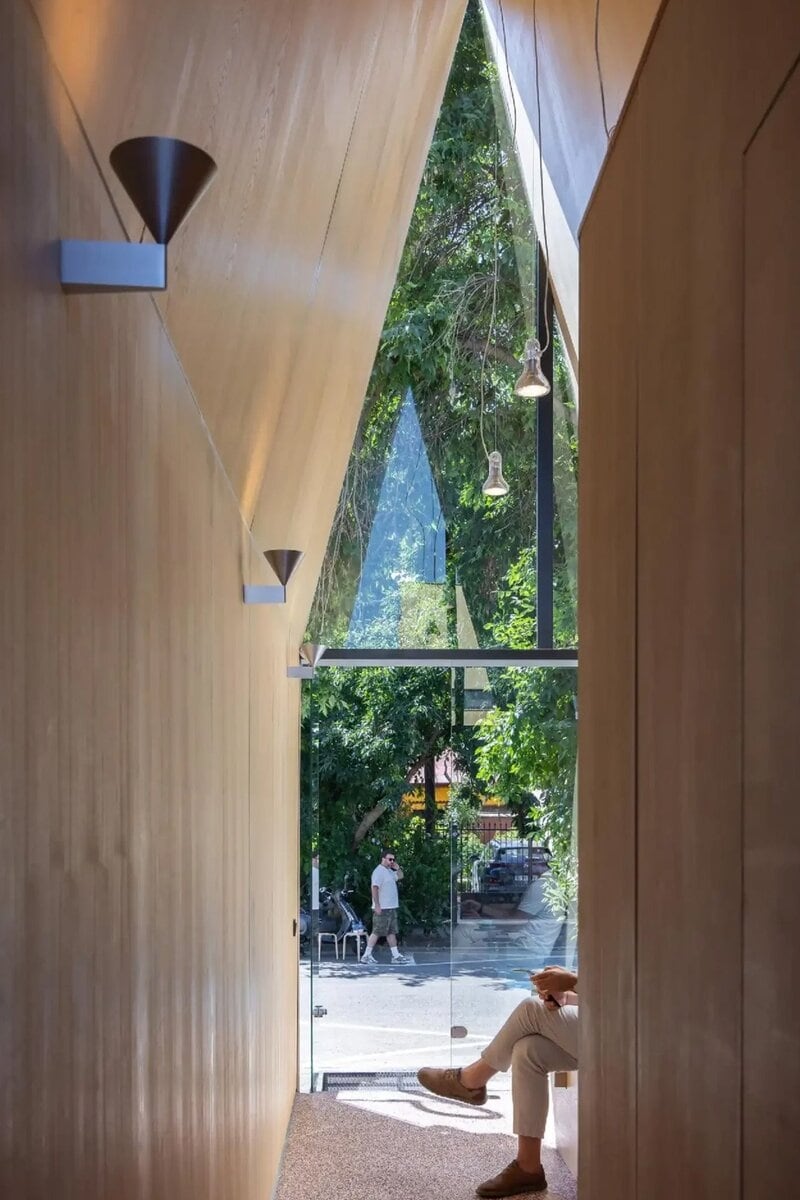
Boiler Coffee’s newest location in Bucharest redefines what’s possible in tight urban spaces. Designed by Vinklu, the café transforms a narrow 2.4-meter alley between two buildings into a tranquil architectural retreat. Despite the spatial limits, the design leans into calm minimalism—using warm wood, terrazzo, and curved built-ins to create a soft, welcoming atmosphere. A long central table anchors the interior, promoting a sense of community while natural light and reflective surfaces expand the perception of space.
This project isn’t just about coffee; it’s about turning overlooked gaps into meaningful environments. Vinklu’s approach celebrates precision, restraint, and creative adaptation, making Boiler Coffee’s compact location feel like a design destination. In a city where space is scarce, this café proves that with vision and subtlety, even the slimmest site can be transformed into something deeply inviting.
Image Credit: Vinklu
Why This Trend Is Growing
- Micro-space Optimization
- Urban designs that repurpose narrow or overlooked spaces are setting new precedents in maximizing utility and aesthetics in confined areas.
- Minimalist Architectural Design
- Minimalist aesthetics in architecture are gaining traction, emphasizing simplicity and warmth to create inviting environments even in small spaces.
- Community-centric Interiors
- Designs focusing on community engagement within shared spaces foster a sense of belonging and interaction, particularly in constrained urban areas.
Industries Being Reshaped
- Urban Architecture
- The industry is pivoting towards innovative small-space solutions to accommodate growing urban populations and limited land availability.
- Cafe and Hospitality
- Cafes and hospitality sectors are reimagining traditional layouts to create immersive experiences in compact urban environments.
- Interior Design
- The sector is embracing a minimalist ethos, integrating natural elements and smart layouts to enhance spatial perception and comfort.