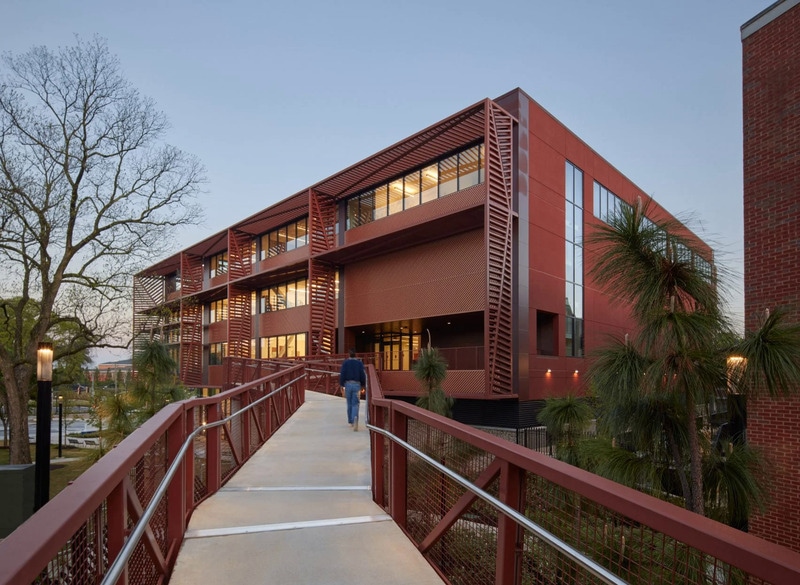
American architecture firm Studio Gang has just finished an academic building at Spelman College with the opening of the Mary Schmidt Campbell Center for Innovation & the Arts. Located in Atlanta, the building is encased in red metal screens that honor the bricks of the campus. The exterior is tinted in the dusty red, which reflects the tone of local soil and brick buildings of the surrounding area.
The studio notes, "The building features a distinctive facade, whose materiality and color draw from regional geology and Spelman's architectural tradition. Flemish bonded brick, which is seen across the campus and whose color recalls Georgia's red clay soil, is used on the ground level, while flat metal panels on the upper volume give the building a contemporary character that reflects the innovation happening there."
Image Credit: Tom Harris
Key Themes Behind This Trend
- Regionally-inspired Architecture
- Designing buildings with local materials and colors, such as the dusty red seen in the Mary Schmidt Campbell Center, offers unique identity and respect for regional heritage.
- Metal-facade Innovations
- The use of flat metal panels in academic building facades can transform traditional institutions into contemporary spaces that symbolize innovation and progress.
- Color-integrated Design
- Integrating colors that resonate with the surrounding environment, like the dusty red reflecting local soil, aids in creating harmony between new constructions and their landscapes.
Where This Applies
- Higher Education Infrastructure
- Innovative architectural designs in academic settings, such as the Mary Schmidt Campbell Center, enhance the educational environment and reflect an institution's commitment to tradition and modernity.
- Sustainable Building Materials
- Utilizing materials that echo regional characteristics minimizes environmental impact and promotes sustainability in construction practices.
- Cultural Heritage Preservation
- Incorporating regional design elements in new buildings signifies a respect for cultural heritage while fostering modernity in urban and academic landscapes.