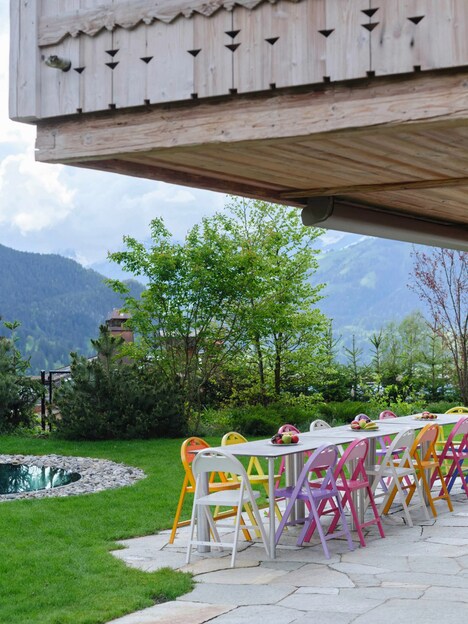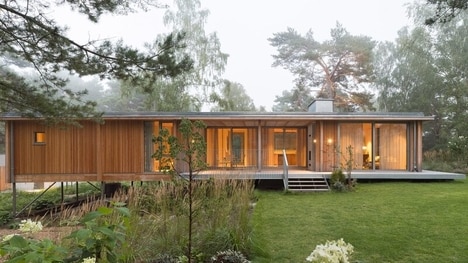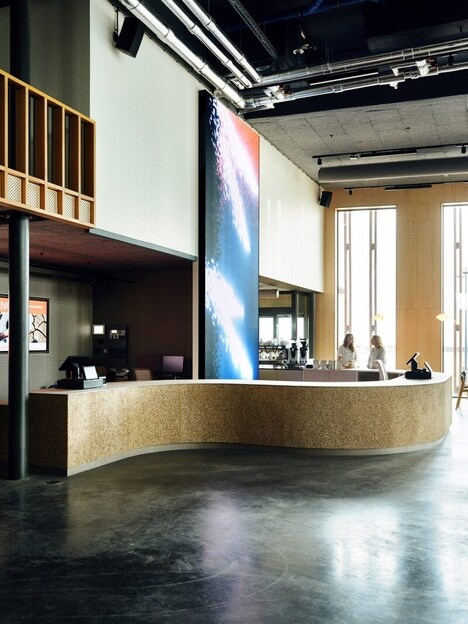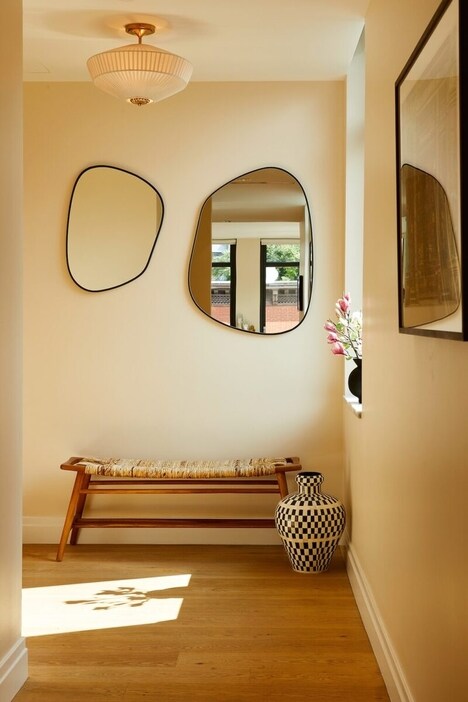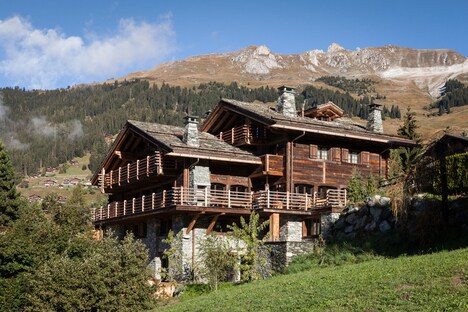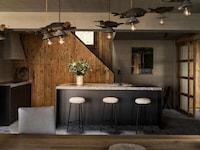
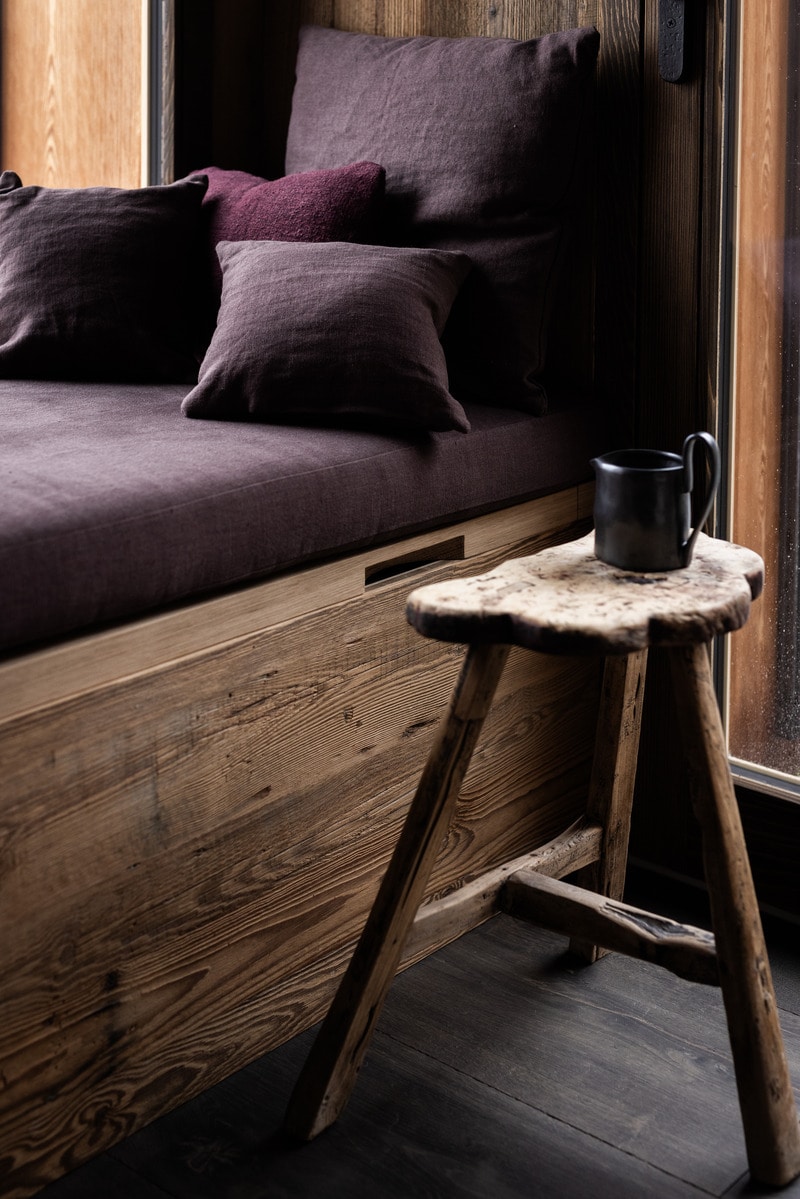
Marianne Tiegen highlights its unique, environmentally conscious methodology for creating residential spaces. The spotlighted project is a contemporary chalet in the Swiss Alps. The foundational use of color derived exclusively from natural, locally sourced materials distinguishes this chalet project.
Marianne Tiegen's process involves a meticulous cycle of gathering plants, flowers, and minerals from the immediate alpine environment and subsequently transforming them into a bespoke color palette. This approach ensures that the resulting hues — such as muted greys, gentle yellows, and dusty purples — are direct visual translations of the surrounding landscape.
Thus, Marianne Tiegen's naturally dyed interior stands not only as aesthetic choices but are intended to forge a profound and continuous narrative connection between the inhabitants and their geographic setting.
Image Credit: @jeremy_wilson_photo
What's Driving This Trend
- Eco-conscious Interior Design
- The use of naturally derived colors and materials in interiors emphasizes sustainability while fostering a deeper connection with the surrounding environment.
- Locally Sourced Aesthetic Materials
- Crafting bespoke color palettes from local flora and minerals presents an innovative approach to resource utilization in design.
- Landscape-inspired Color Choices
- Incorporating colors directly from the local geography creates a unique narrative for residential spaces that resonates with the natural environment.
Who This Affects Most
- Sustainable Architecture
- Emphasizing environmentally friendly design choices can redefine residential construction toward more sustainable practices.
- Artisanal Interior Design
- Bespoke interiors crafted from natural materials cater to a niche market seeking personalized and environmentally conscious design solutions.
- Local Craft and Material Sourcing
- Focusing on materials sourced from the immediate environment supports local economies and minimizes ecological footprints.