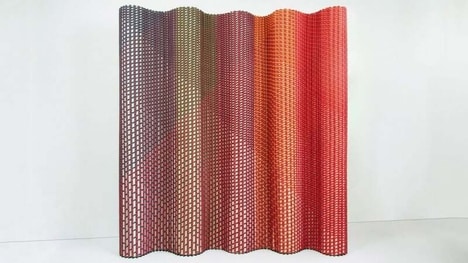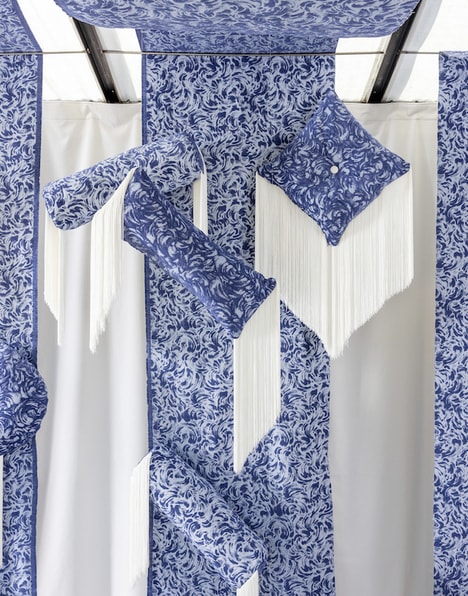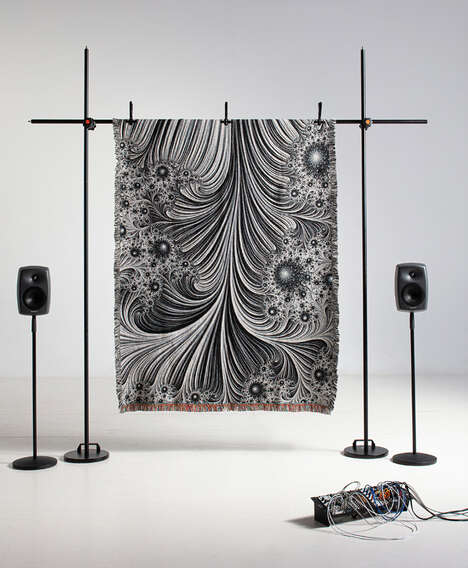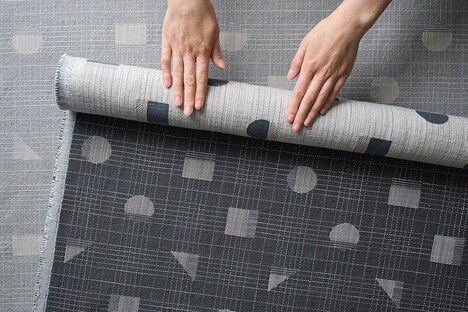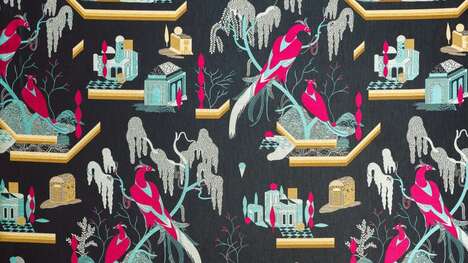
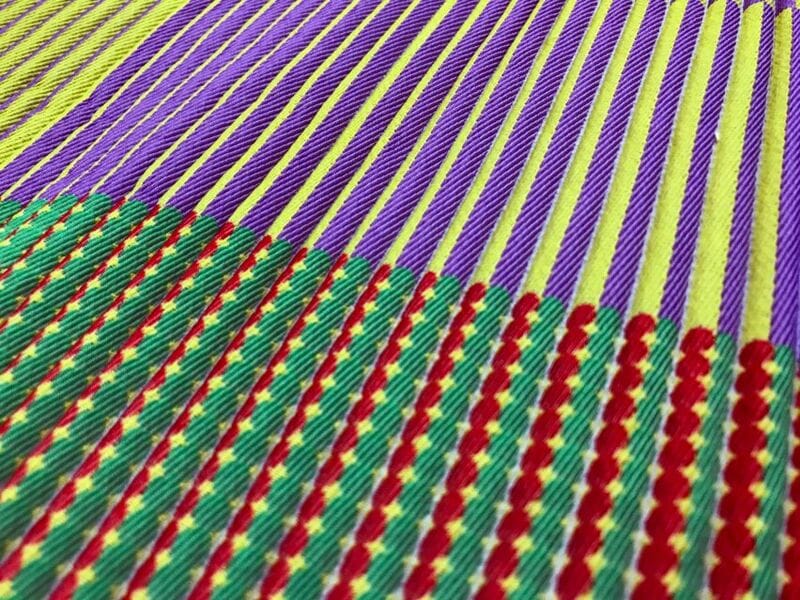
The Lenticular Weave is a textile development technique created by Antoine Peters. The Dutch designer found a way to make textiles appear to change or move when viewed from different angles. The fabric composition incorporates two different designs, each visible from different viewing angles.
The Lenticular Weave technique creates playful juxtapositions and simple animations. Peters created a large textile wall piece to show some of the fabric's possibilities. The example incorporates a range of image transitions, such as a winking eye and an arrow that changes direction.
Peters took inspiration from lenticular printing to create his textile-based version. The lenticular system devices two or more images into strips and splices them together to create a 3D surface appearance.
Image Credit: Antoine Peters
What's Driving This Trend
- Lenticular Weave Textiles
- The technique creates playful juxtapositions and simple animations in textiles, offering innovative possibilities for fashion and home decor.
- Optical Illusion Design
- Incorporating optical illusions into design could create captivating and interactive products in various industries, from advertising to entertainment.
- 3D Surface Appearance
- The lenticular printing technique could be applied for creating 3D surface appearances in fields ranging from printing to packaging.
Who This Affects Most
- Fashion
- The Lenticular Weave textile technique offers opportunities for innovative clothing designs and textile prints that incorporate optical illusions and animations.
- Home Decor
- Lenticular Weave textiles add a playful touch to home decor objects, such as upholstery, curtains, and rugs, that could appeal to young consumers.
- Advertising
- Incorporating optical illusions into advertising campaigns could catch the public's attention and create a novel and memorable experience that stands out from the crowd.