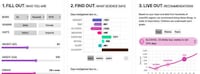
Though thinking about death isn't exactly a fun leisure activity, Nathan Yau's 'How You Will Die' dataviz makes the prospect one's demise a little easier to confront. The graphical interface uses demographic data to assess the likelihood of different causes of death based solely on one's gender, current age, and race.
How You Will Die's data comes from the Centers for Disease Control and Prevention's Underlying Cause of Death database, which provides the cause of death for anyone in the US who died between 1999 and 2014.
The graphical side of the chart consists of a series of dots that each represent one of the user's "simulated lives." As the age climbs, some of these dots die of various causes while other continue on. By the end of the simulation, once all the simulated lives are done, users can get an idea of the chances of various causes of death.
What Makes This Trend Stand Out
- Personalized Death Prediction
- There is an opportunity for businesses to offer personalized death prediction tools based on demographic data analysis.
- Data Visualization for Healthcare
- The use of data visualization tools for healthcare data analysis can help healthcare professionals and researchers to present and interpret complex data sets.
- Demographic Data Analytics
- Demographic data analytics can help businesses to identify trends in various demographics and provide targeted services to meet their needs.
Sectors Adopting This
- Healthcare
- The healthcare industry can benefit from the use of data visualization tools to present complex data and personalized death prediction tools.
- Insurance
- Insurance companies can use demographic data analytics to identify potential customers and offer insurance policies that are tailored to their specific demographic.
- Marketing
- Marketing professionals can use demographic data analytics to identify potential customers and create targeted marketing campaigns.