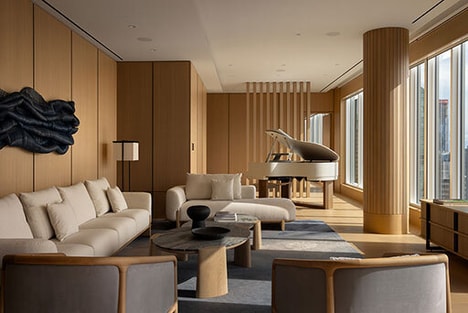
Hoshino Resorts has reimagined Nara Prison in Japan as 'Hoshinoya Nara Prison,' a 48-suite hotel that lets guests stay inside an intact 1908 Meiji-era landmark. The project preserves the site and repurposes former detention areas as accommodations rather than stripping away the building's past.
The plan retains the Haviland System, a radial arrangement with five wings around a central guard post, so visitors still move through the original corridors and arches. Larger rooms are created by linking old cells. The 11-Cell Deluxe combines 11 cells into one suite with a living room and a separate dressing lounge.
A direct path to the Nara Prison Museum turns the stay into a heritage experience as well as a hotel booking. The preserved plan and museum link make adaptive reuse a stronger model for historic properties that need tourism revenue without losing their identity.
Image Credit: Hoshino Resorts
What's Driving This Trend
- Carceral Heritage Stays
- Former prisons reimagined as upscale lodging create niche cultural experiences where preserved architecture becomes a premium hospitality differentiator.
- Adaptive Luxury Reuse
- Historic buildings converted into high-end destinations show how preservation-led design can unlock new revenue while maintaining institutional identity.
- Museum-integrated Hospitality
- Hotels connected to interpretive museums blend overnight stays with education, expanding guest value beyond accommodation into immersive heritage tourism.
Who This Affects Most
- Hospitality
- Boutique and luxury hotel operators can differentiate through historically sensitive properties that deliver memorable stays rooted in authentic place-based narratives.
- Cultural Tourism
- Destination marketers gain new visitor appeal when landmark preservation is paired with experiential lodging and curated historical interpretation.
- Real Estate Development
- Adaptive reuse projects demonstrate how underutilized heritage assets can be repositioned as commercially viable properties without erasing architectural significance.