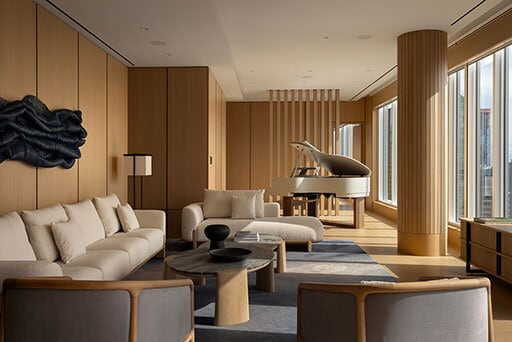
Nobu Hotel Toronto is a hospitality project designed by Studio Munge, positioned within a mixed-use development that integrates residential towers in downtown Toronto. The Nobu Hotel Toronto draws from traditional Japanese ryokan typologies, translating them into a high-rise setting through restrained material choices and spatial sequencing. Interiors use tundra grey stone, rift-cut white oak, and indigo textiles to create a muted palette, while custom metalwork and handcrafted elements reference Japanese craft traditions. A vertical opening between floors introduces natural light and weather elements into the interior, forming a central architectural feature.
The hotel includes a limited number of guestrooms arranged across upper levels, each designed with soaking tubs placed beside large windows overlooking the city. Layouts prioritize open space, walk-in closets, and minimal visual interruption, maintaining a consistent material language throughout. Public areas include a two-level restaurant and lounge, where features such as a suspended chainmail chandelier and tiled surfaces extend the design narrative across hospitality functions.
Image Credit: Nobu
Why This Trend Is Growing
- Urban Ryokan High-rise Integration
- Reinterpretation of traditional ryokan principles in tower forms suggests lodging models that prioritize intimate wellness and contemplative spatial sequencing within dense urban fabric.
- Biophilic Vertical Openings
- Introducing vertical voids that channel natural light and weather into multi-level interiors indicates new ways to blend exterior environmental conditions with interior hospitality experiences.
- Craft-inspired Material Minimalism
- A restrained palette of stone, rift-cut wood, indigo textiles and bespoke metalwork points toward premium products that fuse artisanal detailing with pared-down modernism.
Industries Being Reshaped
- Hospitality-residential Mixed-use
- Co-located hotel and residential programs hint at hybrid ownership and service structures that blur temporary stay and permanent living offerings.
- Luxury Hotel Design
- Focus on private soaking tubs with city vistas and contemplative public spaces signals opportunities for experiential differentiation in high-end hospitality.
- Architectural Materials Manufacturing
- Demand for bespoke metalwork, handcrafted finishes and specialized stone and timber treatments implies possibilities for niche supply chains centered on artisanal fabrication at scale.