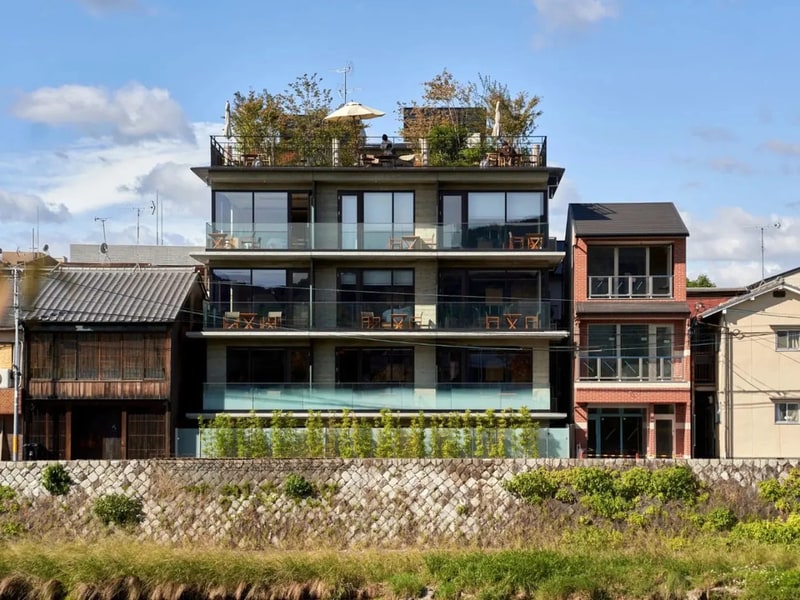
The Genji Kyoto hotel is a 19-room boutique property designed around The Tale of Genji, using architecture and interiors to reflect the structure and atmosphere of the 1,000-year-old novel. The hotel sits along the Kamo River and reinterprets traditional machiya townhouses through a sequence of spaces that unfold gradually. Genji Kyoto hotel integrates tatami flooring, washi panels, handcrafted furniture, and cedar-imprinted concrete, creating a layered environment where materials shift between natural and architectural.
Each room is designed as a different “chapter,” with original artworks by Kyoto artists tied to themes from the novel. Pocket gardens, rooftop landscaping, and a central Zen courtyard blur the boundary between interior and exterior, following the principle that architecture and nature function as one system. The layout avoids repetition, with varied views across river, city, and garden, turning the stay into a sequence of distinct spatial experiences rather than a standardized hotel format.
Image Credit: Design 1st
What's Driving This Trend
- Narrative-driven Hospitality
- A room-by-room storytelling framework transforms stays into sequenced experiences that elevate guest engagement beyond standard amenity-based offerings.
- Architectural Storytelling
- Buildings configured as narrative devices use spatial sequencing and material language to create emotionally resonant environments tied to cultural texts.
- Biophilic Chaptered Design
- Interweaving gardens, courtyards, and natural materials with interior chapters fosters a seamless connection between nature and built form that enriches sensory perception.
Who This Affects Most
- Boutique Hotels
- Small luxury properties adopting literary or thematic concepts differentiate themselves by offering nonstandardized, memorable stays that command premium pricing.
- Interior Design and Furnishings
- Custom-crafted pieces and material palettes aligned to narrative themes enable designers and makers to market highly curated, story-specific product lines.
- Heritage Tourism and Cultural Experiences
- Culturally anchored lodging and programming that interpret historical texts or traditions create immersive heritage experiences that attract culturally motivated travelers.