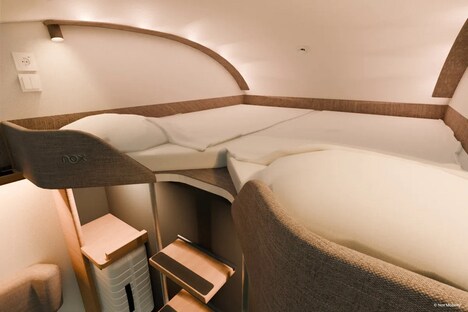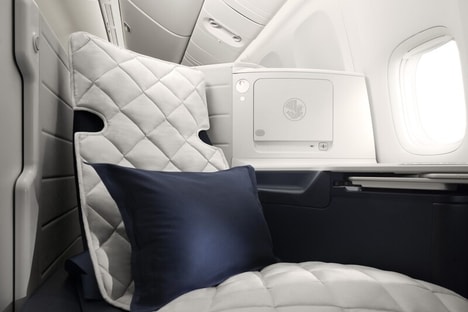
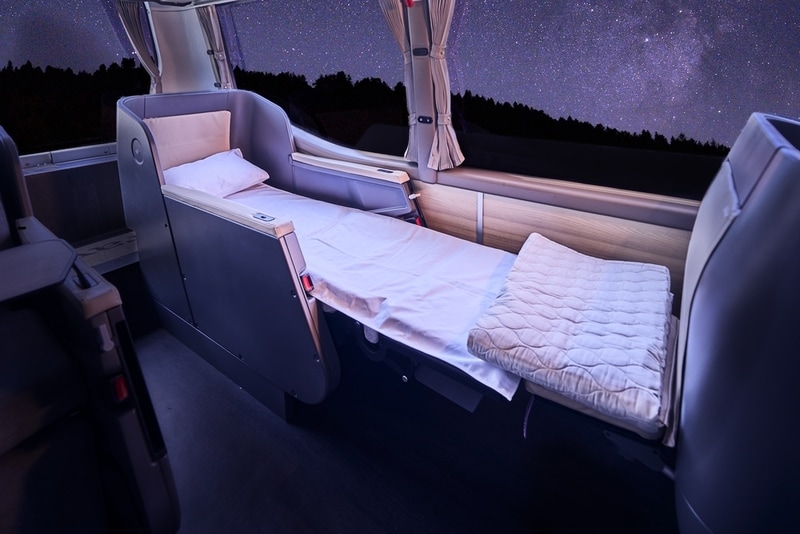
Swiss startup Twiliner has launched a fleet of overnight buses designed to function more like mobile hotels than traditional coach travel. Operating routes between Amsterdam, Zurich, and Barcelona since late 2025, the buses feature seats that convert into fully flat beds at the push of a button, complete with bottom sheets, pillows, and duvets.
Each bus carries 21 passengers across two decks, with amenities including a spacious bathroom, separate changing room, high-speed internet, and an onboard snack bar stocked with Swiss refreshments. The company also operates on renewable fuel derived from waste fats and vegetable oils, positioning itself as a lower-emission alternative to both flying and traditional rail.
The design removes friction points typical of night travel. Passengers skip airport security, hotel booking costs, and the fragmented sleep that comes with train transfers or cramped coach seating. Instead, they board in city centers, recline fully into a bed with individual reading lights and USB outlets, and arrive refreshed at their destination at sunrise. A dedicated steward manages the journey, handling passenger questions and gently waking travelers before arrival.
The model appeals across demographics—from business travelers and leisure tourists to day-trippers—each finding value in swapping hotel nights and transit hassle for uninterrupted rest en route.
Why This Trend Is Growing
- Mobile Hotelization of Transit
- Transforming vehicles into hotel-grade environments introduces lodging-level amenities during point-to-point travel, enabling extended onboard services and premium overnight experiences.
- Sleep-centric Travel Experiences
- A focus on uninterrupted, quality sleep during transit creates demand for ergonomically designed sleeping accommodations, privacy features, and sleep-enhancing onboard technologies.
- Sustainable Long-distance Mobility
- Integrating low-carbon fuels and efficiency-first vehicle design positions night coaches as greener alternatives to short-haul flights and fragmented rail journeys.
Industries Being Reshaped
- Intercity Bus and Coach
- Operators can reimagine fleet interiors and service models around lie-flat seating and cabin hospitality to compete directly with budget airlines and night trains.
- Hospitality and Lodging
- Hotel brands and alternative lodging providers are presented with opportunities to extend their room inventory into moving accommodations and curated onboard guest services.
- Corporate Travel and Events
- Business travel programs and event planners could leverage overnight mobile accommodations to reduce lodging costs and optimize attendee travel time while preserving productivity.