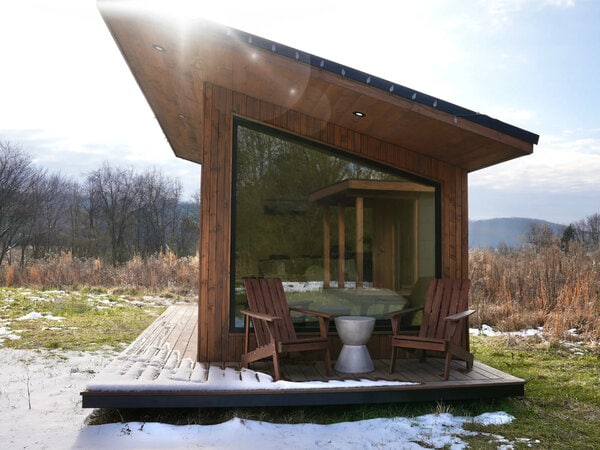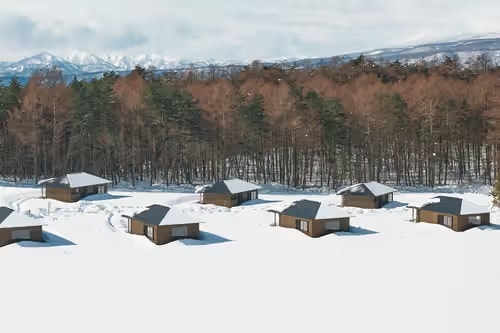
The Azuma Farm Koiwai resort by Azumi Japan is a nature-focused retreat developed within an eight-hectare section of the historic Koiwai Farm in Iwate Prefecture. The Azuma Farm Koiwai project is led by legendary Aman founder Adrian Zecha in partnership with East Japan Railway Company and is designed to celebrate agricultural life and the surrounding rural landscape. The property includes 24 villa-style guest rooms with wooden interiors that reflect the nearby forests and mountains of northern Japan.
Architecture for the resort was designed by Kyoto-based architect Shiro Miura of Rokkaku-ya, who incorporated locally sourced timber and natural materials to integrate the buildings with the surrounding woodland. Experiences at the property focus on seasonal farm life and regional culture, including horseback riding, forest walks, and traditional craft activities linked to Iwate’s heritage.
Image Credit: Azuma Farm Koiwai
What Makes This Trend Stand Out
- Farm Retreat Resorts
- Integration of historic farmland and luxury lodging creating immersive rural stays that redefine guest expectations around authenticity and provenance.
- Timber Sourced Architecture
- Locally harvested wood and natural materials being used to deliver low-carbon, regionally distinctive buildings that blend hospitality with landscape conservation.
- Agritourism Heritage Experiences
- Seasonal, craft- and agriculture-focused programming offering culturally rooted activities that turn everyday farm practices into premium experiential products.
Sectors Adopting This
- Hospitality
- Resorts shifting from standardized service models toward place-based narratives that monetize heritage, land stewardship, and immersive guest learning.
- Sustainable Construction
- Demand for locally milled timber and low-impact construction workflows encouraging new supply chains and prefabrication methods tailored to rural contexts.
- Regional Food and Craft Economy
- Local producers and artisans gaining access to higher-margin tourism markets through curated farm-to-table offerings and experiential retail tied to stays.