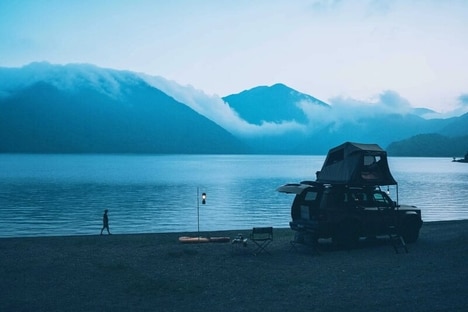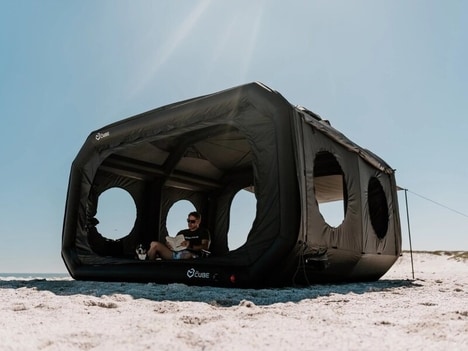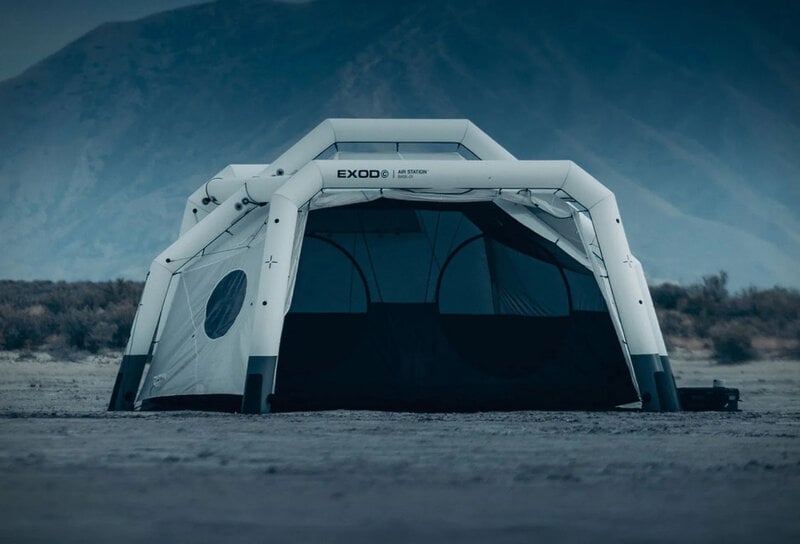
Exod's 'Air Station BASE-01' scales the inflatable tent into a portable expedition camp for overlanders and remote-trip groups. It opens to 17 square meters of interior space, providing shelter for extended outdoor stays, with room for sleeping, planning, and gear storage in one structure.
An air-filled Dacron frame with TPU reinforcement eliminates the usual pole bundle, so one person can pitch the shelter. Space for up to 10 people and a nearly 8-foot ceiling make it suitable as a shared headquarters for longer stays, not just a place to sleep.
Pre-orders at €2,990 are open now, with deliveries expected in spring 2027. At 20 kg packed, the shelter makes a large communal footprint more practical for vehicle-based expeditions, widening the pool of buyers who can justify a shared basecamp.
Image Credit: Exod
What's Driving This Trend
- Inflatable Base Camps
- Pole-free air structures make large expedition shelters easier for solo users to deploy, expanding access to group-scale outdoor infrastructure.
- Portable Adventure Hubs
- Integrated sleeping, planning, and storage layouts signal demand for mobile headquarters that support longer remote stays beyond basic camping.
- Vehicle-based Expedition Gear
- Packable communal shelters align with overlanding growth by balancing generous interior space with transport practicality for remote-trip groups.
Who This Affects Most
- Outdoor Recreation
- Premium inflatable shelters create room for new camping formats centered on comfort, speed, and shared use in remote environments.
- Adventure Travel
- Group-ready portable camps can reshape guided expeditions by reducing setup complexity while increasing livable space at temporary destinations.
- Sporting Goods
- High-performance textile frames and reinforced air beams point to product innovation in durable, lightweight alternatives to traditional tent poles.